
Key takeaways
- Virtual ice breaker ideas for teams work best when they combine a hands-on task with natural conversation — cooking provides both structure and talking points.
- After running hundreds of virtual sessions, we've found that shared grocery lists, real-time cook-alongs and mystery-ingredient challenges generate more participation than passive webinars.
- The most effective formats are short (15–30 minutes), require minimal prep, and give people something concrete to show at the end — a finished dish, a recipe swap or a friendly vote.
- Interactive virtual events are growing: 53% of attendees plan to attend more webinars in 2026, and 95% of event organisers say experiential learning matters — demand is shifting toward hands-on formats.
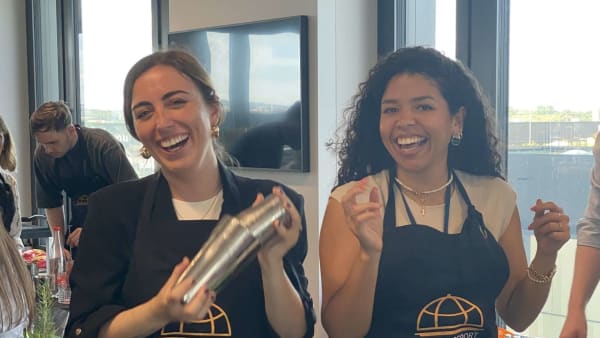
Virtual ice breaker ideas teams actually use are the ones that feel natural, not forced. After delivering hundreds of online cooking sessions for distributed teams at Amazon, Google and across Europe, we've learnt that people engage when there's a shared task, a reason to speak and something low-stakes to laugh about. A burnt onion or a mystery ingredient mishap breaks the ice faster than a round-robin introduction ever will.
Remote and hybrid work are here to stay — particularly in markets like Luxembourg, where 27.3% of employees sometimes work from home and 47% are cross-border workers — and teams still need deliberate moments to connect. Research links remote work to higher stress, sadness and loneliness, even when engagement scores hold. Ice breakers that combine culinary skills with conversation offer structure, sensory engagement and a shared outcome that sticks in memory.

Why cooking-based virtual ice breakers work for remote teams
Cooking is a universal language. Everyone eats, most people have a kitchen story and the act of making something together — even from different cities — builds a shared reference point. Unlike trivia or word games, cooking ice breakers give people permission to be imperfect, to ask for help and to show a side of themselves (their favourite comfort food, their grandmother's recipe, their total lack of knife skills) that a Zoom introduction never reveals.
We've run sessions for teams spanning twelve time zones, and the pattern is consistent: when people cook together, they talk more freely. The task provides the structure; the conversation happens around it. A mystery-ingredient challenge prompts problem-solving and friendly debate. A recipe exchange surfaces culture, nostalgia and dietary quirks. A live cook-along turns a passive meeting into something people remember weeks later.
The rise of experiential virtual events reflects this shift. The global virtual-events market reached $288.4 billion in 2026, and the format mix is now 63% in-person, 33% virtual and 4% hybrid — virtual is no longer a stopgap. Companies invest in these formats because they're repeatable, inclusive of distributed staff and, when designed well, deliver measurable engagement.
10 virtual ice breaker ideas teams that combine culinary skills and conversation
1. Make a meal together (shared grocery list)
Share a simple shopping list in advance — three to five ingredients everyone can find locally. Each person buys their own, then the group reconvenes online to cook the same dish in real time. This format works because it's low-prep, accommodates dietary needs and time zones, and gives everyone the same task with room for personal variation.
We've used this for onboarding cohorts and quarterly all-hands kick-offs. The conversation flows naturally: someone's missing an ingredient and improvises, another shares a shortcut their parent taught them, and by the end everyone has a finished plate and a handful of stories. It's a strong opener for teams that span borders or seniority levels.
2. Live cook-along with a chef host
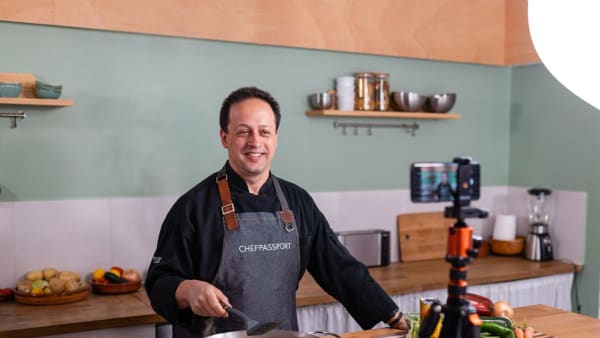
A professional chef leads the group through a recipe step by step, pausing for questions, troubleshooting and chat. Participants follow along in their own kitchens, cameras on, with ingredients either shipped in advance or sourced locally from a shared list.

This is our most-booked virtual team building cooking class format. The chef provides expertise and pacing; the participants provide energy, questions and occasional chaos. It feels less like a webinar and more like a communal kitchen. Teams leave with a new skill, a recipe card and a reason to turn cameras on in the next meeting.
3. Recipe exchange and story share
Ask each person to share a favourite recipe in advance — ideally one with a story attached (a family tradition, a travel memory, a comfort-food staple). During the session, everyone briefly presents their dish and its backstory, then the group votes on which recipes to try together in a future cook-along.
This ice breaker surfaces culture and personality with minimal logistics. We've seen teams discover shared heritage, swap dietary hacks and bond over nostalgic dishes. It works especially well for diverse, multilingual or newly merged teams where people need safe prompts to share something personal.
4. Cook-off challenge (friendly competition)
Set a theme — "best comfort food", "quickest weeknight dinner", "prettiest plate" — and give participants 20–30 minutes to cook and present their entry. The group votes on categories like creativity, presentation or "most likely to actually make again". Keep it light; the goal is laughter, not MasterChef.
We run these as energisers before quarterly planning sessions or as Friday wind-downs. The friendly competition draws out people who are quiet in standard meetings, and the voting creates natural banter. It's aformat that scales from eight to eighty participants when you use breakout rooms.
5. Mystery ingredient challenge
Announce a single surprise ingredient 24 hours before the session — something versatile like chickpeas, miso, tahini or sweet potato. Participants create any dish using the ingredient, then share their results live. The variety is the point: you'll see a curry, a dessert, a salad and a stir-fry, all from the same prompt.
This format rewards creativity and accommodates every skill level. Novice cooks can lean on simple recipes; confident ones experiment. The debrief — "Why did you choose that dish? Where did you learn it?" — generates more conversation than the cooking itself. It's an effective way to break the ice without requiring identical ingredients or equipment.
6. International cuisine exploration
Choose a country or region, assign each participant (or small breakout group) a dish from that cuisine, and have everyone research, cook and present their findings. Reconvene to compare dishes, share what surprised them and discuss the culinary traditions behind the recipes.
We've done Thai street food, Levantine mezze, Italian regional pasta and Luxembourgish classics for corporate groups. It's a natural fit for globally distributed teams or for celebrating heritage months. The format teaches, connects and often sparks ideas for the next in-person team meal.
7. Virtual dinner party (plated and shared)
Each person prepares a dish at home — starter, main or dessert — then the group "eats together" on camera, presenting their plates and the stories behind them. Add a theme (comfort food, childhood favourites, "something I've never cooked before") to give it shape.
This feels more intimate than a standard ice breaker. Sharing a meal, even virtually, mirrors the social ritual of a team dinner. We recommend it for smaller teams (under 15) or for milestone celebrations where you want a slower, more reflective pace. Pair it with a wine or beverage tasting for added atmosphere.
8. Taste test and vote
Send or ask participants to source a common ingredient set — three types of olive oil, four spice blends, regional chocolates, hot sauces. Everyone tastes live on camera, discusses flavour notes and votes on favourites. It's short (15–20 minutes), sensory and surprisingly engaging.
We've used this as a meeting opener before strategy sessions and as an add-on to longer virtual events. It activates a different part of the brain than talking, and the debate over "which one is better" breaks down formality fast. Bonus: it works across time zones because tasting requires no cooking.
9. Guided virtual cooking class (skill-building ice breaker)
Book a short, focused lesson — knife skills, dumpling folding, pasta shaping, sauce emulsification — led by a professional chef. Participants learn a technique, practice it together and leave with a tangible skill and a finished dish.
This doubles as professional development and team bonding. After hundreds of these sessions, we know that people remember the skill long after they forget the meeting agenda. It's particularly effective for onboarding cohorts, where new hires need repeated exposure to one another in a non-work context. For more ideas on onboarding activities, see our guide to new team onboarding activities that actually bond people fast.
10. Virtual potluck show-and-tell
Each person makes a dish that represents them — their heritage, their region, their favourite weekend ritual — and presents it to the group in two minutes or less. No voting, no competition, just storytelling and food.
This is the simplest format on the list and one of the most powerful. It gives everyone equal airtime, celebrates diversity and requires almost no facilitation. We use it for all-hands meetings, cross-functional project kick-offs and team celebrations. The stories are what people remember.
How to choose the right virtual team ice breaker for your group
Not every format works for every team. A cook-off thrives with a competitive, extroverted group; a recipe exchange suits quieter, storytelling-oriented cultures. A mystery-ingredient challenge rewards creativity; a guided class works when people want to learn something new.
Consider three factors:
- Group size. Formats like cook-alongs and classes scale to 50+ with breakout rooms; dinner parties and potlucks work best under 20.
- Time and logistics. Can you ship ingredients, or does everyone source their own? Do you have 20 minutes or 90? Is this a standalone ice breaker or the warm-up to a longer session?
- Team dynamics. New teams need lower-stakes, guided activities. Established teams can handle open-ended prompts and friendly competition. Diverse, multilingual teams benefit from food-based formats that don't rely on verbal fluency.
If you're unsure, start with a live cook-along. It's structured enough to feel safe, interactive enough to break the ice and produces a result everyone can see and taste. For a broader look at what works in virtual formats, read our guide to virtual team building activities that actually work.
Best practices for running virtual ice breakers that combine cooking and conversation
Send clear instructions early. Share the ingredient list, recipe and any equipment notes at least three days in advance. Include substitutions for dietary needs and a contact for questions. Clarity reduces no-shows and stress.
Test your tech. Run a brief tech check 15 minutes before the session. Confirm that participants can see and hear the host, that screen-sharing works and that breakout rooms are configured. Small tech hiccups derail engagement fast.
Encourage cameras on, but don't mandate. We find that 80–90% of participants turn cameras on when there's a hands-on task and the host models it. The few who prefer cameras off still participate in chat and voice. Flexibility matters.
Build in pauses and check-ins. During a cook-along, pause every few steps to let slower cooks catch up and faster ones ask questions. In a competition or taste test, leave time for unstructured chat. The ice-breaking happens in the pauses, not the instructions.
Capture the session. Take screenshots of everyone's finished dishes, collect recipes in a shared doc and send a follow-up email with photos and a "what we made together" recap. It extends the experience and gives people a reason to stay engaged after the call ends.
Pair food with other virtual ice breaker games when appropriate. A five-minute trivia round or a quick Zoom team building game before the cooking starts can warm up a cold room. For teams who've never met, consider layering a short non-food ice breaker first, then moving into the culinary activity.
Why virtual ice breakers still matter in 2026
In-person events are back — 63% of the 2026 event mix is in-person — but virtual formats remain essential for distributed, hybrid and cross-border teams. A third of all corporate events are still virtual, and the demand is for interactive, experiential sessions, not passive webinars.
The business case is clear. Global employee engagement sits at 20% in 2026, and manager engagement has fallen sharply — a context that makes deliberate connection efforts necessary, not optional. Research shows that three in four cross-functional teams underperform, and shared experiences that rebuild weak ties and social capital can unblock collaboration the org chart cannot.
Virtual ice breakers that combine cooking and conversation address these needs because they're repeatable, inclusive and measurably engaging. They work across time zones, accommodate dietary and cultural diversity and create a reference point — "remember when we all made dumplings?" — that carries into future meetings.
Common mistakes to avoid with virtual ice breaker ideas for teams
Choosing a format that's too complex. A three-course menu sounds impressive but creates stress and drop-offs. Start simple — one dish, 30–45 minutes, minimal equipment. You can always add complexity once the format is proven.
Skipping the follow-up. The session ends, everyone logs off and the moment evaporates. Send a recap email with photos, recipes and a thank-you within 24 hours. It signals that the time mattered and keeps the connection alive.
Ignoring dietary needs and access. Always ask about allergies, restrictions and ingredient availability. Offer substitutions, and make it clear that participation doesn't require perfect execution. The goal is connection, not culinary perfection.
Over-facilitating. The best virtual ice breakers have a light touch. Introduce the task, set the timer, step back and let people cook and chat. Resist the urge to fill every silence — that's where the real conversations happen.
Not measuring what worked. After the session, ask for quick feedback: What did you enjoy? What would you change? Would you join another? Forty per cent of event organisers still struggle to prove ROI; even a simple post-event survey builds the case for repeating what works.
Virtual ice breaker ideas for specific team scenarios
New team onboarding: Use a guided virtual cooking class or a recipe exchange. Both create repeated exposure in a low-pressure setting, and new hires leave with a skill and a roster of faces they recognise. Pair this with other onboarding activities to build a cohesive first-week experience.
Quarterly all-hands or kick-offs: A cook-off challenge or mystery-ingredient session works well for larger groups. Use breakout rooms for cooking, then bring everyone back to vote and share highlights.
Cross-functional project teams: A shared-grocery-list cook-along or an international cuisine exploration gives people from different departments a shared task and talking points outside their work silos.
Hybrid teams (some in-office, some remote): Ship ingredient kits to remote participants so everyone has the same starting point. Run the session as a live cook-along with a chef host, ensuring that remote voices are as visible as in-room ones.
End-of-year celebrations: A virtual dinner party or potluck pairs well with holiday themes. For December events, consider tying it to corporate Christmas party ideas or a tasting of seasonal foods from different cultures.
How ChefPassport designs virtual ice breakers for corporate teams
We've been running virtual team building cooking classes since 2020, and we've delivered hundreds of sessions for distributed teams at Amazon, Google, the European Central Bank and companies across Europe. Every session is hosted live by a professional chef, with optional ingredient-kit shipping worldwide, and we handle the logistics — dietary accommodations, time-zone coordination, platform setup and post-event follow-up.
Our most popular formats mirror the list above: live cook-alongs, mystery-ingredient challenges, international cuisine explorations and skill-building classes. We tailor the menu, pacing and facilitation style to your team size, goals and culture. Whether you need a 20-minute ice breaker before a board meeting or a 90-minute celebration for a global department, we design it to feel personal, not packaged.
If you're planning a virtual event and want an ice breaker that people actually remember, explore our virtual cooking class options or get in touch for a quick consultation. We'll help you choose the right format, handle the logistics and deliver a session that turns strangers into teammates — one dish at a time.
Final thoughts: virtual ice breaker ideas teams will actually use
The best virtual ice breaker ideas for teams are the ones that feel less like an obligation and more like a moment people look forward to. Cooking-based formats work because they're hands-on, inclusive and low-stakes — and because food is a universal entry point for conversation, culture and connection.
After hundreds of sessions, we know what separates a forgettable ice breaker from one that shifts team dynamics: clarity of instructions, a skilled facilitator, a shared outcome and enough space for people to be imperfect and human. Start with one of the ten formats above, adapt it to your team's needs and test it. The worst that happens is someone burns the onions and everyone laughs. The best is that people show up differently to the next meeting — cameras on, guards down, ready to connect.
For more ideas on building stronger remote teams, explore our guides to 30 virtual icebreakers for remote teams, remote team building ideas and fun games to play with colleagues online.
Planning a team event?
ChefPassport runs hands-on cooking experiences for corporate teams — in person at Kachatelier, Luxembourg, and virtually worldwide. Instant price estimate on the site.
Frequently asked questions
Free guide
Team Building Menu & Pricing Guide
Menus, group sizes, formats and indicative pricing — everything you need to plan, in two PDFs. No spam, unsubscribe anytime.