
A good icebreaker turns a silent call into a team. The wrong one feels like forced fun — so keep them short, optional, and low-pressure, and you'll get every voice in the room within the first two minutes.
Here are 30 virtual icebreakers for Zoom and Teams, grouped so you can grab the right one fast.
The rule that makes them work
Two minutes, everyone answers, nobody loses. Run it at the start (not the end), keep participation genuinely optional, and it reads as a warm welcome rather than a chore.
Quick warm-ups (under 2 minutes)
- One-word check-in — describe your week/mood in a single word.
- This or that — rapid either/or (tea or coffee, beach or mountains).
- Rose & thorn — one good thing, one challenge this week.
- Emoji mood — drop the emoji that sums up your day in the chat.
- Weather report — "I'm feeling sunny / a bit foggy today…"
- Thumbs scale — rate the week 1–5 with fingers on camera.
- One-line win — share one small win since the last meeting.
- Finish the sentence — "This week I'm looking forward to ___."
Getting-to-know-you (3–5 minutes)
- Two truths and a lie — the team votes on the lie.
- Show & tell — grab one object near you and explain it.
- Where in the world — share your location or the view out your window.
- First job — what was your very first job?
- Hidden talent — reveal one surprising skill.
- Desk tour — 10-second pan of your workspace.
- If you could… — dinner with anyone, any superpower, etc.
- Map pin — everyone drops their hometown on a shared map.
- Three favourites — film, food, place — go.
- Bucket-list item — one thing you want to do this year.
Themed & fun rounds (5–10 minutes)
- Guess the baby photo — submit beforehand; team matches photo to person.
- Virtual background battle — funniest/most creative background wins.
- Pet & kid cameo — bring your pet (or plant) to the call.
- Caption this — host shares an image; funniest chat caption wins.
- Name that desk — match anonymised workspace photos to people.
- Two-minute trivia — five quick questions on a rotating theme.
- Emoji story — describe your weekend in emojis; others guess.
- Would you rather — escalating dilemmas, vote with reactions.
- Soundtrack of your week — one song that captures your week.
- Lightning Pictionary — one quick round on the whiteboard.
- Scavenger dash — "bring back something blue" in 30 seconds.
- Gratitude round — one thing (or person) you're grateful for.
How to run them well
- Time-box to 2–5 minutes and start on time — icebreakers are the warm-up, not the workout.
- Use breakout rooms for groups over ~12 so everyone actually speaks.
- Make it opt-in — invite, don't compel; the quiet ones warm up faster that way.
- Match the moment — light "this or that" for a status call; deeper "rose & thorn" for a team retro.
Need full activities, not just openers? See Zoom team building games, 10 online fun games for teams, and the wider guide to virtual team building activities.
From icebreaker to real connection
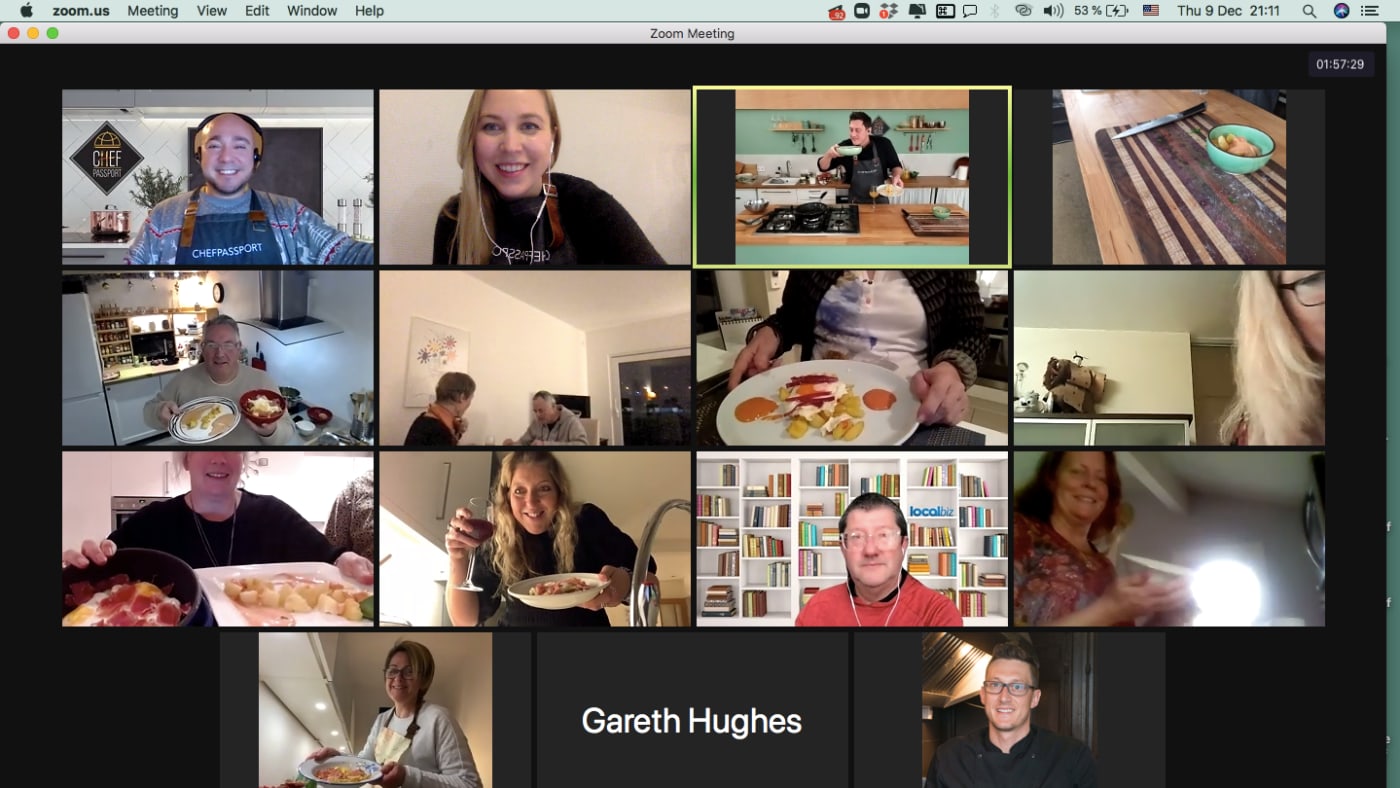
Icebreakers spark the first laugh. To turn that into a genuine team memory — for onboarding, a quarterly social, or a reward — a hosted experience goes further. ChefPassport's virtual cooking classes bring everyone into one kitchen over Zoom or Teams, ingredients delivered and a chef guiding the cook, so the warm-up becomes a shared meal.
Frequently asked questions
What is a good virtual icebreaker?
The best virtual icebreakers are short, low-pressure and need no setup — 'two truths and a lie', a one-word check-in, 'this or that' polls, or 'show us something on your desk'. They warm people up in two minutes without putting anyone on the spot.
How do you do an icebreaker on Zoom or Teams?
Run it in the first 2–5 minutes: pose the prompt, let people answer aloud, in the chat, or with reactions. Use breakout rooms for larger groups so everyone speaks, and keep it optional so it feels like a warm welcome, not forced fun.
What's a quick icebreaker for a remote meeting?
A one-word check-in ('describe your week in a word') or a 'this or that' poll takes under two minutes and gets every voice in the room early — which makes the rest of the meeting more participatory.
What are good icebreakers for a new remote team?
Low-stakes sharing works best: 'two truths and a lie', 'show and tell one object', or 'where in the world' (share your location/view). They reveal personality without the pressure of performing.
What are good icebreakers for virtual team meetings?
Good icebreakers for virtual team meetings are short, low-pressure activities that get everyone talking in the first few minutes. Quick warm-ups like one-word check-ins, this-or-that questions, or rose & thorn work well because they take under two minutes and don't require preparation. Keep participation optional and run them at the start of the meeting for the best engagement.
Free guide
Team Building Menu & Pricing Guide
Menus, group sizes, formats and indicative pricing — everything you need to plan, in two PDFs. No spam, unsubscribe anytime.