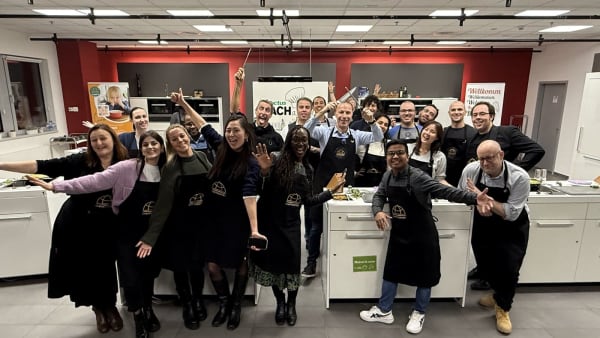
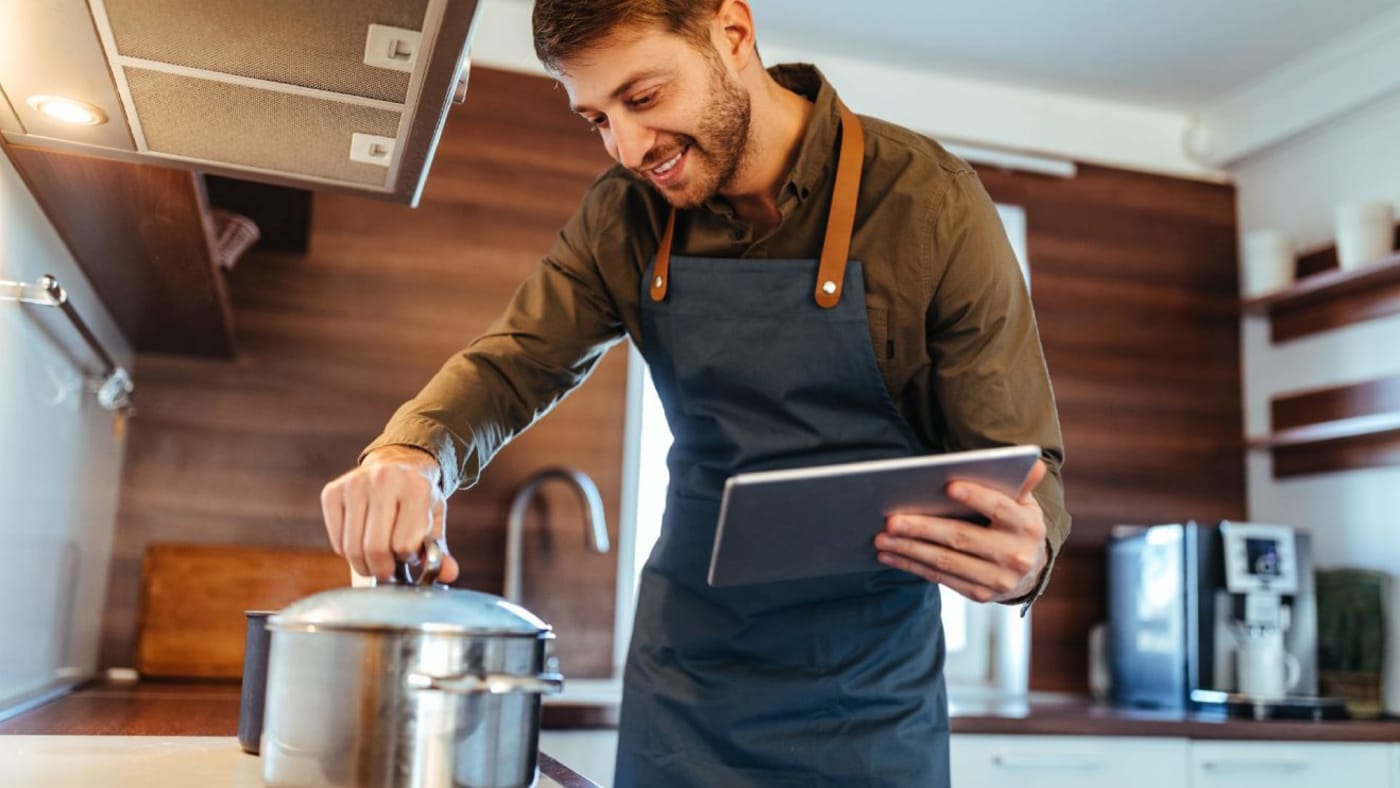
Virtual fun activities for employees need to do more than fill a calendar slot. The best ones rebuild connection, relieve stress and create shared experience across time zones—goals passive webinars rarely achieve. Interactive cooking workshops deliver all three, bringing distributed teams into their own kitchens to chop, stir and plate together in real time.
After running hundreds of virtual cooking events for remote teams at companies like Amazon, Google and Deloitte, we've seen which formats create genuine engagement and which fall flat. This guide explains why cooking stands out as a virtual team activity, what makes it effective for mental health and connection, and how to design sessions that people actually enjoy.
Key takeaways
- Virtual fun activities for employees work best when they're interactive, sensory and require collaboration—cooking ticks all three boxes.
- Research links remote work to higher rates of stress, sadness and loneliness, making deliberate shared experiences matter more (Gallup, 2026).
- The global virtual-events market reached $288.4 billion in 2026, with 53% of attendees planning more webinars—but 95% value experiential learning over passive formats (Bizzabo, 2026).
- Cooking activities build trust, teach time management, boost problem-solving and bring out creativity—skills that transfer directly to work.
- Successful virtual cooking sessions hinge on clear instructions, manageable recipes, varied skill levels and space for conversation alongside the task.
Why remote work creates demand for virtual fun activities
Remote work solves flexibility and geography, but it introduces structural challenges to mental health and connection. When your team never shares a lunch room or sees each other between meetings, informal ties weaken. The lack of daily rhythm—commute, shared space, predictable end-of-day—leaves many people feeling unproductive, isolated or adrift.

Research from Gallup's 2026 State of the Global Workplace shows remote employees can be more engaged than some peers but are also more likely to report stress, sadness and loneliness. Global employee engagement sits at just 20%, and manager engagement has fallen sharply—a backdrop that makes deliberate connection and re-engagement efforts matter more than ever.
Virtual fun activities for employees need to fill that gap. They need to be repeatable, low-friction, inclusive of all time zones and skill levels, and genuinely enjoyable—not another webinar people tune out of. That's where cooking comes in.
Why cooking works as a virtual team activity
Cooking is sensory, participatory and forgiving. It works from anyone's home kitchen, requires minimal setup, and creates a tangible outcome people can eat and share. Unlike trivia or games that suit extroverts, cooking engages different learning styles and lets quieter team members shine.

The concept behind cooking as a team-building tool draws on cooking therapy—the idea that the act of preparing food offers mental health benefits beyond nutrition. Cooking requires focus, creativity, collaboration and problem-solving. It combines physical movement (chopping, stirring) with cognitive tasks (timing, sequencing) and social interaction (teaching, storytelling). Those layers make it richer than most virtual activities.
In practice, virtual cooking sessions give distributed teams a shared goal, a reason to be on camera with hands busy, and permission to talk about something other than work. They create what psychologists call "parallel play"—working side by side, which lowers the pressure of direct eye contact while still fostering connection.
If you're exploring broader options for remote teams, our guide to virtual team building activities that actually work covers formats beyond cooking.
Top benefits of virtual cooking activities for employee mental health
Cooking together makes you feel more connected
Cooking is one of the few activities that translates seamlessly to video. Everyone works in their own kitchen, but you're following the same recipe, troubleshooting the same steps, and tasting variations shaped by local ingredients or family technique. That creates equality—no one has home advantage, and everyone brings something personal to the table.

In our sessions, people share stories about where they first ate a dish, how their grandmother made it differently, or why they've never tried a certain ingredient. Those anecdotes build trust and reveal culture in ways a Zoom icebreaker rarely does. Research from McKinsey shows that stronger workplace networks are linked to higher sponsorship, belonging and engagement—social capital that cooking activities help restore.
Cooking improves mood and relieves stress
Cooking is repetitive and rhythmic. Chopping vegetables, stirring a sauce, kneading dough—these tasks occupy your hands and quiet your mind. The sensory feedback—smell, texture, colour—grounds you in the present, a form of active mindfulness that many people find more accessible than meditation.
When you cook with colleagues, you're also creating something together and sharing small victories: a sauce emulsifying, bread rising, flavours balancing. Those micro-successes lift mood and offer a break from the cognitive load of back-to-back meetings. People often leave our virtual classes visibly more relaxed than they arrived, even when the recipe challenged them.
Cooking boosts problem-solving skills
Cooking is improvisation under constraint. You have a recipe, a set of ingredients, limited time, and variable equipment. When something goes wrong—onions burn, dough won't rise, a spice is missing—you adapt. You taste, adjust, substitute, and move forward.
Those are the same skills teams need when a project changes scope or a dependency breaks. Cooking makes problem-solving feel lower-stakes and more playful, which is exactly when people learn best. After hundreds of sessions, we've noticed that teams who cook together ask better questions and collaborate more fluidly in follow-up work meetings.
Cooking teaches time management and sequencing
A recipe is a project plan. You read the brief (ingredients, steps), estimate duration, prioritise tasks (prep before heat, multi-task where possible), and deliver on deadline (dinner's ready). Cooking forces you to think in parallel—boil water while chopping, not after—and to recover when timing slips.
In a virtual cooking class, everyone works to the same clock, which adds gentle accountability. People learn to manage their pace, communicate when they're behind, and help teammates catch up. Those are transferable skills, especially for teams struggling with remote coordination.
Cooking brings out creativity and personal expression
Cooking is creative in the truest sense: you transform raw ingredients into something new. Even when following a recipe, people make choices—how finely to chop, how much garlic to add, how to plate the dish. Those choices reveal personality and invite experimentation.

We've seen quiet engineers become animated explaining a spice blend from home, and reserved analysts proudly show off plating skills. Cooking gives people permission to show a side of themselves that work rarely sees, which deepens relationships and makes collaboration feel more human.
How to choose effective virtual fun activities for your team
Not every virtual activity delivers the benefits above. The best ones share a few qualities: they're active (not passive watching), inclusive (accessible across skill levels and cultures), social (with time to talk, not just task), and memorable (they create a story people retell).
Cooking meets all four. But so do other hands-on formats—art workshops, mixology, craft challenges. The key is to avoid one-way presentations and choose activities where people make something, share process, and leave with a tangible result.
When evaluating options, ask:
- Does it require active participation, or can people hide off-camera?
- Can someone with zero experience still succeed and enjoy it?
- Does it create natural conversation, or does talk feel forced?
- Will people remember it a month later?
If the answer to any is no, keep looking. For a broader list of formats that pass this test, see our guide to virtual team engagement activities that work.
What makes a virtual cooking class work well
We've hosted virtual cooking sessions for teams of eight and teams of 150, across six continents, in a dozen cuisines. The sessions that work best follow a few principles:
Pick a forgiving recipe. Choose dishes with flexible timing, room for substitution, and steps that don't require precision. Stir-fries, pasta, dumplings, curries and tacos all work. Soufflés and macarons don't.
Send ingredients or a clear shopping list in advance. People need time to shop. If you're shipping kits, build in a week for international delivery. If you're sharing a list, specify quantities and offer substitutes for hard-to-find items.
Structure for mixed skill levels. Some people cook daily; others never do. A good facilitator shows every step, checks in frequently, and normalises mistakes. We often run beginner and advanced tracks in parallel, with breakout rooms for hands-on help.
Build in social time. The cooking is the excuse; the conversation is the goal. Leave space for people to chat while they chop, share photos of their mise en place, and eat together at the end. That's where connection happens.
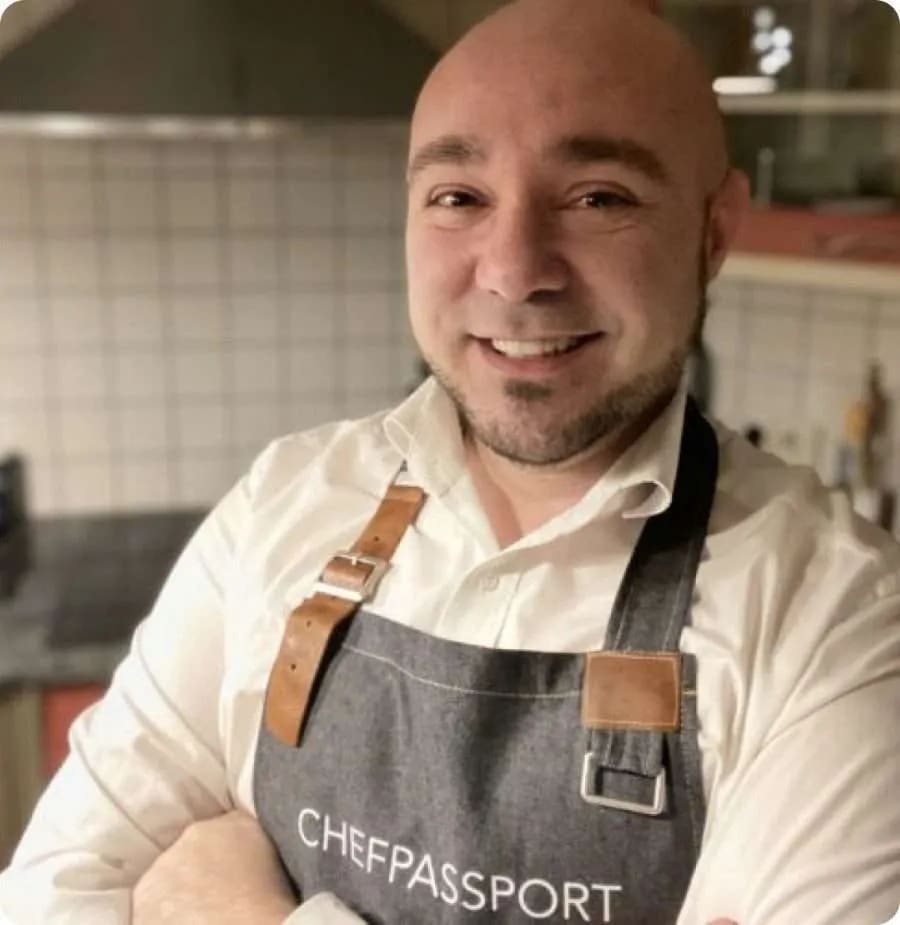
Use a professional chef-host. A skilled facilitator keeps energy high, troubleshoots in real time, teaches technique clearly, and makes everyone feel capable. The difference between a chef-led session and a DIY recipe share is night and day.
If you're planning your first virtual cooking event, our virtual team building cooking classes are designed for exactly this—distributed teams, mixed experience, and a focus on connection over perfection.
Other virtual fun activities that complement cooking
Cooking works brilliantly, but it's not the only option. Effective virtual activities share the same DNA: hands-on, inclusive, and social. Here are a few that pair well with cooking or work as standalone sessions:
- Cocktail or mocktail making — short, energetic, and great as a happy-hour wind-down.
- Coffee or tea tasting — sensory, educational, and conversation-rich.
- Art or craft workshops — painting, origami, terrarium-building; good for visual learners.
- Music or rhythm sessions — drumming, singing, beat-making; high energy, low pressure.
- Story-sharing circles — structured prompts, small groups, deep listening.
For a full menu of ideas, including games and icebreakers, explore our list of 30 virtual icebreakers for remote teams and Zoom team building games that actually work.
Virtual activities in the context of hybrid and distributed work
The 2026 event mix is 63% in-person, 33% virtual and 4% hybrid, according to Bizzabo. In-person remains the anchor, but a third of corporate events are still virtual—driven by distributed teams, budget constraints, and the need for repeatable touchpoints.
In Luxembourg, where 47% of employees are cross-border workers and 27.3% sometimes work from home (EURES / STATEC), virtual activities aren't a substitute for face-to-face; they're a necessary complement. They reach people who can't attend an office event, create continuity between quarterly offsites, and keep remote team members visible and included.
The most effective people teams layer formats: a quarterly in-person offsite, monthly virtual social events, and weekly informal hangouts. Cooking fits naturally into that rhythm—frequent enough to matter, special enough to remember.
How to measure whether a virtual activity worked
Attendance and smiling Zoom tiles aren't enough. To know if a virtual fun activity delivered value, track:
- Post-event survey sentiment — "Would you join another session like this?" and "Did you learn something new about a teammate?"
- Repeat participation — do the same people sign up again, or does attendance drop?
- Conversations afterwards — do people reference the session in Slack, emails or meetings?
- Manager observation — do team leads notice improved collaboration, especially across silos?
Research from Bizzabo shows that 40% of organisers still struggle to prove event ROI (down from 70% in 2025)—buyers increasingly expect measurable outcomes, not just attendance. Anecdotal feedback and participation trends are your best proxies when engagement is the goal.
Common mistakes when running virtual fun activities
After hundreds of sessions, we've seen a few patterns that reliably undermine virtual events:
- Making attendance mandatory. Forced fun isn't fun. Invite warmly, make it easy to join, and let people opt in.
- Picking an activity the organiser loves, not one the team will enjoy. Survey preferences first.
- Skipping the prep. If people don't have ingredients, equipment or context, they'll drop off or disengage.
- Overloading the agenda. A 60-minute session should have one core activity and plenty of buffer, not three crammed segments.
- No facilitation. A Zoom link and a recipe isn't an event. You need a host to guide, energise and hold space.
The goal is to make participation feel easy, optional and rewarding. When people leave saying "that was fun, let's do it again," you've succeeded.
Why cooking remains one of the best virtual activities for distributed teams
Cooking offers something rare in the virtual-event landscape: it's universal, personal, creative, collaborative and useful. Everyone eats. Most people have a kitchen story. The activity itself—chopping, tasting, plating—feels concrete in a way that digital work rarely does. And at the end, you've made something you can share with family or housemates, extending the experience beyond the Zoom window.
We've watched teams who barely spoke in meetings laugh over burnt garlic, trade spice tips across continents, and plate dishes with the pride usually reserved for shipping a product. Those moments rebuild the weak ties and informal trust that McKinsey research shows three in four cross-functional teams lack.
Virtual fun activities for employees need to do more than entertain. They need to reconnect, re-engage and remind people why working together matters. Cooking does all three—reliably, affordably, and at scale.
Ready to bring your remote team together?
If you're looking for a virtual activity that builds genuine connection, relieves stress and creates shared memory, a live cooking class is one of the most effective formats we've found. Our virtual cooking classes are hosted by professional chefs, designed for all skill levels, and run for teams from eight to 150+ across any time zone.
We handle the logistics—recipes, shopping lists, kit shipping (optional), facilitation and tech support—so you can focus on your team. Whether you're onboarding new hires, celebrating a milestone, or simply rebuilding connection after a tough quarter, we'll design a session that fits your culture and goals.
Explore our remote team building ideas or get in touch to plan your next event.
Planning a team event?
ChefPassport runs hands-on cooking experiences for corporate teams — in person at Kachatelier, Luxembourg, and virtually worldwide. Instant price estimate on the site.
Frequently asked questions
Free guide
Team Building Menu & Pricing Guide
Menus, group sizes, formats and indicative pricing — everything you need to plan, in two PDFs. No spam, unsubscribe anytime.