
Fun team bonding activities are structured experiences that bring colleagues together to build trust, strengthen communication and improve collaboration through hands-on participation. The best activities combine challenge, novelty and shared purpose—creating moments that break down silos, surface hidden strengths and make teams remember why they work better together.
After running hundreds of corporate team events, we've learned that successful bonding activities share three traits: they require real collaboration (not just co-attendance), they create a level playing field (no one starts as the expert), and they generate stories teams retell weeks later. The format matters less than the experience it unlocks.
Key takeaways
- Effective team bonding activities build trust and psychological safety through shared challenge, not passive entertainment.
- Research from McKinsey shows three in four cross-functional teams underperform—deliberate bonding events can rebuild coordination and weak ties.
- The best activities suit your team's composition: in-person for co-located teams, fun team activities on Zoom for distributed groups, and hybrid for flexible workforces.
- Balance structure with autonomy—teams need clear goals but room to solve problems their own way.
- Bonding works when people leave with new respect for colleagues' strengths, not just a shared afternoon out.
Why fun team bonding activities matter for modern teams
Teams don't bond by accident. When colleagues see each other only in meetings or on Slack, relationships stay transactional. Fun team bonding activities create the conditions for trust, empathy and psychological safety to develop—the invisible infrastructure high-performing teams run on.
Global employee engagement sits at just 20%, according to Gallup's 2026 State of the Global Workplace report, and manager engagement has fallen sharply. Against that backdrop, deliberate connection and re-engagement efforts matter more than ever. Research from McKinsey shows that stronger workplace networks are linked to higher sponsorship, belonging and engagement—the "social capital" case for bringing people together.
Bonding activities also serve practical ends. They help distributed or hybrid teams rebuild weak ties, onboard new hires into team norms (not just the org chart), reboard after a restructure, and celebrate milestones in ways that reinforce company values. When done well, they transform abstract concepts—collaboration, inclusion, agility—into lived experience.
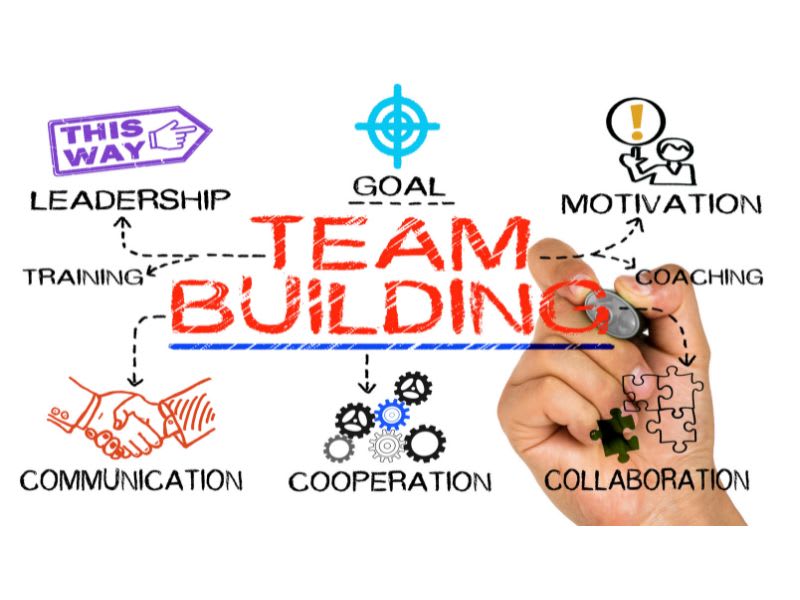
What makes a team bonding activity effective?
Not all activities bond. We've seen teams sit through elaborate events and leave as strangers. The difference comes down to design. Effective team bonding activities share five characteristics:
- Real interdependence: success requires input from every member, not just the loudest or most senior.
- Novelty: the activity takes people out of their usual roles and comfort zones, creating a level playing field.
- Challenge: teams must solve a problem, build something or learn a skill together—passive spectating doesn't bond.
- Reflection: a short debrief surfaces what happened, what people noticed and how it connects to work.
- Shared stories: the best activities generate moments teams reference and laugh about weeks later.
Peer-reviewed research links team cohesion meaningfully to performance, and psychological safety supports learning behaviour, efficacy and innovative performance. Bonding activities accelerate both by creating low-stakes practice grounds for collaboration, feedback and mutual support.
Types of team bonding activities: choosing the right format
The right format depends on where your team works, how distributed they are and what you're trying to achieve. Here's how to choose.
In-person team bonding activities
In-person events remain the gold standard for building deep trust and belonging. According to Bizzabo's 2026 Event Marketing Statistics, 78% of event organisers say in-person conferences, summits and conventions are their most impactful marketing channel, and 66% of planners say face-to-face meetings are more valuable than before the pandemic (Cvent Planner Pulse 2026).
In-person activities work best when you need to rebuild trust after a difficult period, onboard a new team, align cross-functional groups or celebrate a milestone. Sensory experiences—cooking, building, exploring outdoors—create stronger memories and deeper connection than conference-room exercises.
Virtual team bonding activities
Virtual bonding isn't a compromise—it's a deliberate format for distributed teams. The global virtual-events market is estimated at $288.4B in 2026, up from $235.4B in 2025, according to Research and Markets. Virtual is a durable, growing channel, not a pandemic stopgap.
Virtual activities suit teams spread across time zones, hybrid workforces and companies with high percentages of remote workers. In Luxembourg, 27.3% of workers sometimes work from home (versus 13.3% EU27), 12.7% usually do (versus 8.9% EU27), and 47% of employees are cross-border workers—an unusually distributed, multilingual workforce that needs virtual connection (EURES Labour Market Information: Luxembourg).
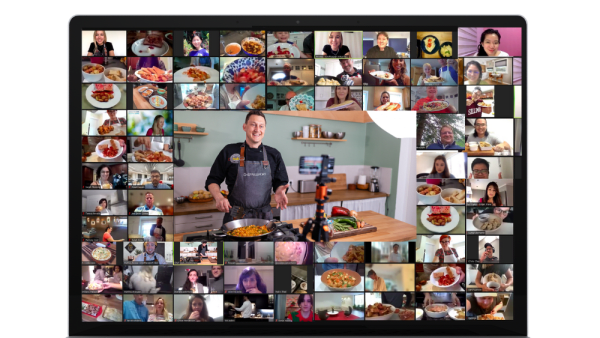
The best virtual bonding activities are interactive and hands-on. Research from Bizzabo shows that 53% of attendees plan to attend more webinars and 95% of organisers say experiential learning matters—demand is for interactive, hands-on virtual formats over passive ones. Virtual cooking classes, for example, let remote teams cook the same dish side by side, creating a shared sensory experience despite the distance.

Hybrid team bonding activities
Hybrid events bring in-office and remote colleagues into the same experience. They're harder to design—you need to ensure remote participants aren't second-class citizens—but they're essential for flexible workforces. A hybrid cooking class, for instance, might have one group in a Luxembourg kitchen and another in Paris, both cooking the same menu and sharing results on a video call.
15 fun team bonding activities that actually work
Here are fifteen team bonding ideas we've seen succeed across industries, team sizes and formats. Each includes what makes it work and when to use it.
1. Corporate cooking classes (in-person or virtual)
Teams cook a multi-course meal together, guided by a professional chef. Cooking requires coordination, clear communication, trust and shared accountability—all the behaviours high-performing teams need. It's also a level playing field: the CFO and the intern both start as students.
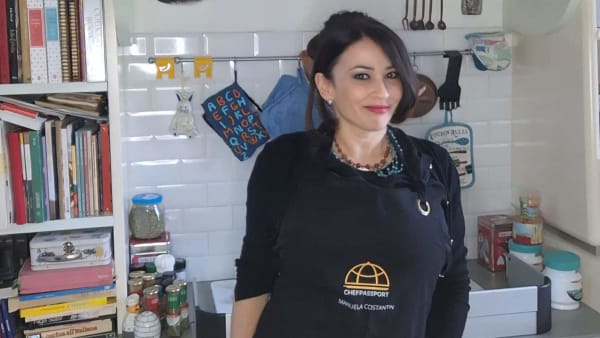
We've run hundreds of corporate cooking classes in Luxembourg and virtual sessions worldwide. Teams leave with new respect for colleagues' problem-solving and a meal they created together. It works for onboarding, cross-functional alignment, client entertainment and milestone celebrations.

2. Outdoor adventure challenges
Activities like rock climbing, high-ropes courses, orienteering or river adventures combine physical challenge with problem-solving. Teams must communicate clearly, manage risk and support each other through discomfort.
Outdoor challenges work well for teams that spend too much time in conference rooms and need a jolt of energy. They're less suitable for teams with wide fitness gaps or accessibility needs—screen participants carefully and offer alternative roles.
3. Tree planting or conservation volunteering
Corporate volunteering—especially environmental work like tree planting—builds team cohesion while contributing to a cause larger than the company. According to Deloitte's workplace volunteering survey, volunteer opportunities matter to joining and staying with an employer and improve connection, fulfilment and teamwork.
Partner with organisations like OneTreePlanted or check with your local forestry office. Planting trees together gives teams a tangible, lasting result and aligns with ESG goals. It's especially powerful for younger workers: Deloitte's 2025 Gen Z and Millennial Survey shows that younger employees are strongly motivated by learning, meaning and well-being.
4. Treasure hunts or city scavenger hunts
Teams navigate a city or campus, solving riddles and completing challenges at checkpoints. Treasure hunts encourage creative problem-solving, time management and collaboration under light pressure.
They work particularly well for distributed teams visiting a central office, for onboarding groups exploring a new city, or as part of a conference programme. Luxembourg's compact old town, for example, makes an excellent scavenger-hunt backdrop.

5. Build-a-boat challenges
Teams design and construct a boat from cardboard, tape and other basic materials, then race them across a pool or lake. The activity forces rapid prototyping, iterative problem-solving and resilience when the first design sinks.
Build-a-boat works for engineering, product and innovation teams who appreciate the design-build-test loop. It's high-energy, competitive and generates plenty of laughter.
6. Escape rooms (in-person or virtual)
Teams solve puzzles and riddles to "escape" a themed room within a time limit. Escape rooms require delegation, pattern recognition, communication under pressure and the willingness to listen to quieter team members who often spot clues others miss.
Virtual escape rooms suit remote teams and work well as hour-long icebreakers. In-person versions are better for deeper immersion. Choose difficulty carefully—too easy and teams coast; too hard and frustration replaces fun.
7. Cocktail or mixology classes
Teams learn to craft classic cocktails or mocktails, guided by a bartender. Mixology classes combine creativity, precision and sensory exploration. They're shorter and less intensive than cooking classes, making them ideal for after-work events or client entertainment.
Mixology works particularly well in Luxembourg's multilingual, internationally minded corporate culture. Offer non-alcoholic options so everyone can participate fully.
8. Board-game tournaments
Modern strategy board games—Settlers of Catan, Ticket to Ride, Codenames—require negotiation, planning and collaboration. Tournaments let teams rotate opponents, creating cross-team connections and friendly rivalry.
Board games suit introverted teams, rainy-day programmes and low-budget initiatives. They're easy to scale and can be run virtually using platforms like Board Game Arena.
9. Charity build or pack events
Teams assemble bikes for children, pack care packages for refugees or build furniture for community centres. Charity builds combine hands-on collaboration with social impact.
These events work well when you want to reinforce company values around giving back. Choose a cause aligned with your team's interests and ensure the receiving organisation genuinely needs what you're building—impact matters more than hours logged.
10. Sports tournaments (football, volleyball, rounders)
Classic team sports foster camaraderie, healthy competition and physical energy release. Keep teams small and rotate line-ups so everyone plays; avoid formats where the athletic minority dominates.
Sports work for younger, fitter teams and companies with strong sporting cultures. Offer non-competitive alternatives—scorekeeper, photographer, barbecue chef—for those who prefer not to play.
11. Murder mystery dinners
Teams solve a fictional murder over a multi-course meal, playing assigned characters and piecing together clues. Murder mysteries encourage creative role-play, active listening and collaborative deduction.
They suit teams comfortable with improvisation and theatricality. Virtual murder mysteries work surprisingly well—everyone has a script and the format naturally structures conversation.
12. Photography or art workshops
Teams learn a creative skill—portrait photography, watercolour, ceramics—and create something tangible. Creative workshops reveal hidden talents, encourage experimentation and give perfectionists permission to be beginners.
Art activities work for teams experiencing burnout or creative block. They're calming, non-competitive and generate conversation starters (the art people take back to their desks).
13. Cooking competitions (like MasterChef)
Teams compete to create the best dish from a mystery basket of ingredients, judged on taste, presentation and teamwork. Competitions raise the stakes and energy compared to standard cooking classes.
We've run MasterChef-style events for sales teams, product launches and end-of-year celebrations. The competitive edge suits high-performing, results-driven cultures. Keep judging criteria transparent and celebrate effort as much as outcome.
14. Virtual icebreakers and games
Short, structured activities—Zoom team-building games, virtual icebreakers, trivia, Pictionary—warm up remote meetings and build familiarity over time. No single icebreaker transforms a team, but repeated, low-stakes interaction compounds.
Icebreakers work for globally distributed teams, new hires and the start of virtual workshops. Rotate formats to keep them fresh and let team members take turns hosting.

15. Cultural cuisine exploration
Teams explore a national cuisine—Luxembourgish, Italian, Thai, Chinese—learning about food history, techniques and cultural context while cooking together. Cultural cuisine classes combine skill-building with cross-cultural understanding, especially valuable for multinational teams.
These sessions celebrate diversity, spark conversation about heritage and travel, and create space for team members to share their own food stories.
Best practices for planning effective team bonding activities
Planning determines whether an activity bonds or flops. After hundreds of events, here's what we've learned works.
Define clear roles and expectations
A team needs various personalities to function well. Some people are natural presenters; others generate creative ideas; still others excel at organisation and follow-through. Before the activity, clarify what success looks like and let people self-select into roles that suit their strengths.
During cooking classes, for example, we see teams naturally divide into sous chefs, timekeepers, platers and presenters. Acknowledge and celebrate those differences rather than forcing uniformity.
Build trust through psychological safety
Trust is the bedrock of any long-term relationship, professional or personal. In a team setting, members must trust that colleagues will keep commitments, support common goals, step up during difficult times and maintain open communication.
Bonding activities accelerate trust when they create safe space for vulnerability—trying something new, making mistakes, asking for help. Frame activities as learning experiences, not performance tests, and model openness from the top.
Encourage self-awareness and mutual understanding
Gaining self-awareness of your strengths, weaknesses, motivations and habits lets you contribute more effectively to the team. Everyone on your team has a unique work style. Instead of expecting people to work your way, learn to understand their strengths and limits.
Build in reflection time. After a challenge, ask: What worked? What surprised you? What did you notice about how the team collaborated? Team members appreciate why others do what they do when they learn about each other's true motives and work styles—eliminating wasteful conflict.
Make feedback constructive and growth-focused
Feedback delivered in a way that promotes growth and development can be a powerful tool for discovering blind spots and building self-awareness through others' perspectives. Feedback helps team members teach and develop one another while addressing obstacles to performance in a respectful, constructive manner that emphasises professional progress rather than personal criticism.
During team activities, encourage real-time, specific appreciation: "I loved how you spotted that timing issue" or "Your idea to divide the tasks saved us ten minutes." Positive, behaviour-focused feedback reinforces collaboration.
Establish ground rules as a group
Based on the mix of personalities and work styles, identify team strengths and possible pitfalls as a group. Ground rules might cover how members communicate, set and meet deadlines, and handle challenges. Members understand how to navigate obstacles and accountability better when ground rules are in place.
Remember that ground rules should be adaptable and evolve based on the team's needs. Co-create them rather than imposing from above.

Choose activities that suit your team's composition
A high-intensity outdoor challenge might energise a young sales team but alienate a mixed-age, mixed-ability finance group. A creative workshop might bore engineers who prefer tangible problem-solving. Know your audience.
Ask team members what formats they'd find meaningful. Survey anonymously if needed. Inclusion by design—considering accessibility, dietary needs, cultural norms, introversion/extraversion balance—ensures everyone can participate fully.
Measure outcomes, not just attendance
According to Bizzabo's 2026 research, 40% of organisers still struggle to prove event ROI (down from 70% in 2025)—buyers increasingly expect measurable outcomes, not just attendance.
Define what success looks like before the event: stronger cross-functional relationships, faster onboarding, higher engagement scores, visible behaviour change. Follow up with a short pulse survey two weeks later and track whether teams reference the experience in their work.
When to use team bonding activities: strategic timing
Bonding activities work best when they serve a clear business or people need. Here are the moments when they deliver the highest return.
- Onboarding new hires or teams: New team onboarding activities help people learn names, working styles and team norms faster than org charts ever will. A shared experience in week one creates connection that compounds over months.
- After a restructure or acquisition: When reporting lines and team compositions shift, bonding activities rebuild trust and help people find their new place in the network.
- Kicking off a quarter or major project: Start with alignment and energy. A kick-off cooking class or challenge sets collaborative tone and surfaces how the team will work together under pressure.
- Reconnecting hybrid or distributed teams: When colleagues rarely see each other face to face, periodic in-person or virtual bonding events maintain the weak ties that make collaboration smoother.
- Celebrating milestones: Mark a product launch, sales target or anniversary with an experience that reinforces what the team accomplished together and why it mattered.
- After a difficult period: Restore morale and energy after layoffs, a failed project or sustained crunch time. Bonding activities signal "we're moving forward" and give people permission to reconnect.
Common mistakes to avoid
Even well-intentioned bonding activities can backfire. Here's what to watch for.
- Forcing participation in high-risk or physically demanding activities: Not everyone wants to abseil or do trust falls. Offer choice or alternative roles so no one feels coerced.
- Ignoring accessibility, dietary or cultural needs: Check for food allergies, mobility limits, religious observance and language barriers. Inclusion isn't an afterthought—it's event design.
- Running activities with no clear purpose: "We're doing this because it's fun" isn't enough. Teams see through box-ticking. Be honest about the why: rebuilding trust, breaking silos, celebrating a win.
- Neglecting follow-up or reflection: Without a debrief, teams miss the learning. Spend ten minutes at the end asking what people noticed, what surprised them and what they'll take back to work.
- Choosing activities that mirror existing power dynamics: If the same people dominate every activity, nothing bonds. Look for formats that redistribute status—cooking classes, creative workshops, role-play games.
How ChefPassport designs team bonding experiences
We've hosted corporate cooking experiences for Amazon, Google, the ECB, Deloitte, JP Morgan, Wellington and more than 200 companies since 2019. Every session is designed around the principle that teams bond when they create something together, not when they watch someone else perform.
Our in-person classes in Luxembourg bring teams into professional kitchens to cook multi-course meals side by side. Our virtual cooking classes reach distributed teams worldwide, delivering ingredients and live chef instruction so remote colleagues share the same sensory experience. Both formats work because cooking requires real collaboration—timing, communication, delegation, trust—and because everyone leaves with a tangible result and new respect for teammates.
If you're looking for a team bonding activity that builds skills, creates stories and leaves people energised rather than drained, explore our Luxembourg corporate cooking classes or virtual team-building sessions.
Final thoughts: bonding is a practice, not an event
One great activity won't transform a dysfunctional team into a high-performing one. But repeated, well-designed bonding experiences—combined with strong day-to-day management—compound over time. Teams that invest in connection outperform those that rely on org charts and KPIs alone.
The best fun team bonding activities are the ones that match your team's needs, respect people's differences and create space for real collaboration. Choose thoughtfully, facilitate well and follow through. The relationships you build will show up in every project, meeting and deadline that follows.
Planning a team event?
ChefPassport runs hands-on cooking experiences for corporate teams — in person at Kachatelier, Luxembourg, and virtually worldwide. Instant price estimate on the site.
Frequently asked questions
Free guide
Team Building Menu & Pricing Guide
Menus, group sizes, formats and indicative pricing — everything you need to plan, in two PDFs. No spam, unsubscribe anytime.