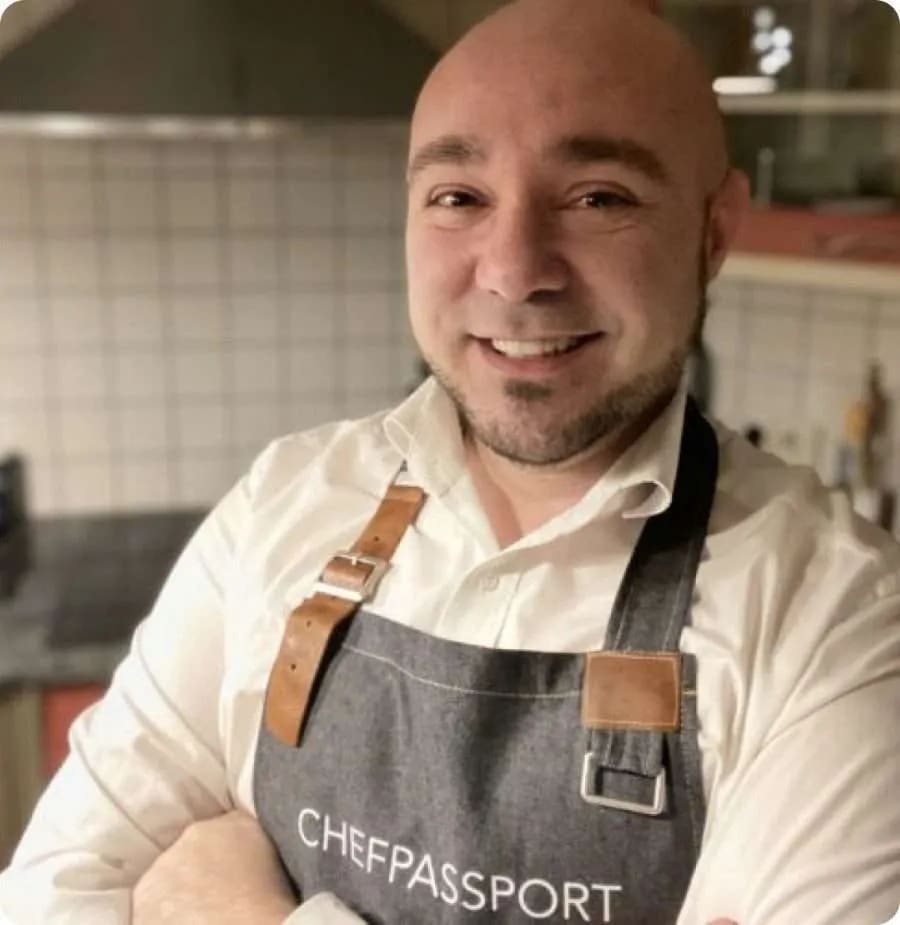

An online culinary school is a platform that teaches cooking skills remotely through video lessons, recipes and often certificates—built for individual learners aiming to improve technique, earn credentials or explore career paths. When HR teams, L&D professionals and team leaders search for online culinary schools, they're often asking a different question: how do we use culinary learning to upskill, engage or connect our distributed workforce?
The answer depends on whether your goal is skill development or team cohesion. Traditional online culinary schools excel at the former; live, interactive virtual cooking experiences excel at the latter. This guide evaluates both through a corporate lens, then shows when each format fits.
Key takeaways
Online culinary schools typically offer self-paced, asynchronous courses designed for individuals—harder to scale for teams seeking shared, synchronous experiences.
Most ranking content targets home cooks and career changers; few platforms address corporate buyers looking for team engagement, inclusion and measurable ROI.
Live virtual cooking team-building delivers real-time interaction, equal participation across skill levels and direct team-cohesion outcomes without certificate overhead.
The global virtual-events market is estimated at $288.4B in 2026, reflecting sustained corporate demand for high-quality virtual formats.
Budget constraints top the list of challenges: 61.9% of event teams cite budget as their biggest barrier, making low-friction, repeatable virtual solutions attractive.
What is an online culinary school, and how does it work?
An online culinary school delivers cooking instruction remotely. Most platforms combine pre-recorded video lessons, downloadable recipes, technique demonstrations and sometimes live Q&A sessions or cohort Zoom calls. Students progress at their own pace through modules—knife skills, sauces, pastry, world cuisines—and often receive a certificate of completion.
These schools serve individuals: home cooks levelling up dinner-party confidence, career changers exploring professional pathways, or food enthusiasts chasing credentials from a recognised brand name. Content is polished, curriculum is structured, and the business model revolves around monthly subscriptions or one-off course fees.
For a single employee seeking personal enrichment, they're excellent. For a team leader trying to bring 15 colleagues together across three time zones, the format starts to fracture.
Why most online culinary schools aren't built for corporate teams
Traditional online culinary schools are designed around individual progress, not group cohesion. Here's where the misalignment shows up:
Asynchronous by default. Everyone watches and cooks on their own schedule. There's no shared moment, no room for spontaneous laughter when someone's béchamel splits, no collective "aha" when the instructor demonstrates a tricky fold.
No facilitation for teams. Platforms optimise for solo learners. There's rarely a host managing breakout discussions, prompting peer feedback or guiding reflection—the connective tissue that turns a cooking lesson into a team-building experience.
Curriculum overhead. If your goal is connection, a six-week certificate track is overkill. Teams want a 90-minute session that ends with energy and a meal, not homework and a final exam.
Skill assumptions. Many courses assume baseline competence. Mixed-ability teams—where one person roasts vegetables weekly and another has never diced an onion—need inclusive instruction and real-time encouragement, not a polished video they pause 47 times.
Pricing and licensing. Per-seat subscriptions add up fast. Few schools offer group licences with live facilitation, kit logistics or post-event engagement reporting.
These aren't flaws for the individual learner. They're structural mismatches for the corporate buyer who needs synchronous participation, measurable engagement and a team that feels closer at the end.
What corporate teams actually need from culinary learning

Photo: Monstera Production / Pexels
When HR and L&D teams explore culinary education, they're solving for outcomes that sit outside a syllabus. After running hundreds of virtual cooking events for distributed teams, we've seen the same goals surface again and again:
Connection across distance. Remote and hybrid colleagues need shared experiences that rebuild the watercooler moments Slack can't replicate. Research shows that remote employees can be more engaged than some peers but are also more likely to report stress, sadness and loneliness—a reason companies invest in deliberate connection rituals.
Inclusive participation. Everyone contributes, regardless of cooking skill, seniority or time zone. Live formats let facilitators check in, adapt pace and celebrate small wins in real time.
Morale and recognition. Cooking together is tangible care. It signals investment beyond the org chart. Well-recognised employees were 45% less likely to have changed employers two years later, and shared culinary experiences feel personal in a way webinars don't.
Cross-functional collaboration. Three in four cross-functional teams underperform on key metrics; a live cooking session where engineering and sales must coordinate timing, share tips and troubleshoot together can rebuild weak ties the org chart cannot.
Cultural exploration without travel. A Thai curry workshop or a dim sum session introduces global flavours, sparks curiosity and creates shared reference points—especially valuable for multinational or multilingual teams.
These outcomes require real-time interaction, not self-paced modules. They need a host who reads the room, not a pre-recorded voice-over.
Comparing online culinary schools to live virtual team-building: a framework
Here's how the two formats stack up when evaluated through a corporate lens:
CriterionTraditional Online Culinary SchoolLive Virtual Cooking Team-BuildingFormatSelf-paced, pre-recorded lessonsSynchronous, live-hosted sessionsPrimary audienceIndividual learners, career changersCorporate teams, remote workforcesSkill levelOften assumes baseline competenceDesigned for all levels, inclusive by defaultInteractionMinimal; forums, occasional Q&AHigh; real-time chat, breakouts, facilitationDurationMulti-week courses, modules, certificates60–120 minute sessions, no homeworkGoalSkill acquisition, credentialsTeam cohesion, morale, shared experienceFacilitationNone (self-directed)Professional chef-host manages pacing, engagementKits & logisticsLearner sources own ingredientsOptional curated ingredient kits shipped to homesReportingCourse completion ratesAttendance, engagement scores, qualitative feedbackPricing modelPer-person subscription or course feeFlat or per-attendee event fee, group pricing
If your organisation wants employees to deepen individual culinary technique over months, a traditional online culinary school may fit. If your goal is to reconnect a dispersed sales team in 90 minutes, build psychological safety in a newly formed product squad or celebrate a quarter-end milestone with something memorable, live virtual cooking delivers faster and with less overhead.
When an online culinary school makes sense for your team
There are scenarios where a self-paced culinary platform is the right call:
Ongoing enrichment benefit. You offer a library of learning resources—language apps, LinkedIn Learning, meditation subscriptions—and want to add culinary skills as an employee perk. A platform subscription fits that catalogue model.
Asynchronous by necessity. Your workforce spans so many time zones that no single live session is viable, and you value flexibility over synchronicity.
Deep skill development. A hospitality or F&B company wants front-line staff to complete formal culinary training for career progression. Credentials and multi-module structure matter.
Budget for scale. You have hundreds or thousands of employees and prefer a per-seat SaaS model over coordinating dozens of live events.
Even in these cases, complement asynchronous learning with occasional live sessions. Research shows that 53% of attendees plan to attend more webinars and 95% of organisers say experiential learning matters—demand is for interactive, hands-on virtual formats over passive ones.
When live virtual cooking team-building is the better fit
Most corporate buyers exploring "online culinary school" actually need a live team experience. Choose this route when:
Connection is the goal. You want colleagues to laugh, share stories and feel closer by the end—not just learn to brunoise a carrot.
Everyone participates in real time. Mixed abilities, mixed seniorities, mixed geographies—all cooking the same dish at the same moment creates equity and energy asynchronous content cannot.
You need measurable engagement. Attendance, camera-on rates, chat activity and post-event NPS give you data to report upward. 40% of organisers still struggle to prove event ROI; live platforms make it easier.
Logistics matter. A professional host manages timing, troubleshoots tech hiccups and keeps energy high. Optional ingredient kits arrive at doorsteps so participants don't scramble through grocery lists. You can read more about how virtual team events with kits simplify the participant experience.
It's a milestone or celebration. Onboarding a new cohort, wrapping Q4, thanking a high-performing squad—these moments deserve presence and shared ritual, not a video library.
In Luxembourg, where 47% of employees are cross-border workers and 27.3% sometimes work from home (versus 13.3% EU27 average), live virtual formats meet teams where they already are: distributed, multilingual and hungry for connection that doesn't require a commute.
What to look for in a live virtual cooking team-building provider

Photo: RDNE Stock project / Pexels
Not all virtual cooking experiences are created equal. After hundreds of sessions with clients ranging from Amazon to the European Central Bank, here's what separates a forgettable Zoom call from a session people talk about for weeks:
Professional facilitation. A trained chef-host who reads the room, adapts pacing, celebrates participation and keeps chat lively. Cooking skills alone aren't enough; you need someone who understands group dynamics.
Inclusive design. Recipes work for all skill levels, dietary needs are surfaced in advance, and instructions assume nothing. First-time cooks and confident home chefs both leave feeling accomplished.
Cultural authenticity. If you're exploring Thai, Japanese or Moroccan cuisine, the instructor brings context—stories, ingredient origins, cultural significance—not just a recipe card. This matters for teams that value learning and curiosity.
Kit logistics (optional but valuable). Curated ingredient boxes shipped to participants remove friction. No one misses the session because they couldn't source galangal or didn't realise "fresh ginger" meant a three-inch piece, not a jar of paste.
Platform flexibility. Sessions run on Zoom, Microsoft Teams or your preferred tool. No proprietary software, no download barriers.
Post-event engagement. Recipes, photos and follow-up prompts extend the experience. Participants recreate the dish with family or share photos in Slack—small rituals that reinforce connection.
For ideas on how to incorporate cooking into broader team strategies, explore our guide to virtual team-building activities that actually work or browse remote team-building ideas for distributed workforces.
Real-world applications: how companies use virtual culinary experiences
Here's how corporate teams deploy live virtual cooking beyond the "Friday fun" slot:
Onboarding cohorts. New hires cook together in week two, building peer relationships before they're assigned to siloed projects. It's informal, low-stakes and creates shared stories. Read more in our piece on new team onboarding activities that actually bond people fast.
Cross-functional kickoffs. A product launch team from engineering, design, marketing and ops cooks a multi-course meal in breakout groups, mirroring the coordination they'll need for the real project.
Global culture series. A monthly virtual cooking event exploring a different cuisine each time—Thai in January, Italian in February, Japanese in March—becomes a recurring ritual that signals investment in curiosity and inclusion.
Milestone celebrations. Hitting a revenue target, closing a funding round, shipping a major release—cooking together feels personal and celebratory without requiring travel or a catered venue.
Manager development. A session where new managers facilitate their own breakout cooking groups, practising real-time feedback, encouragement and coordination in a low-risk environment.
Seasonal and cultural events. Chinese New Year team-building with dumpling-making, or a December session exploring holiday traditions across geographies, creates belonging through food.
Each application prioritises connection and shared experience over certification or technical mastery—a fundamentally different outcome than an online culinary school.
How ChefPassport's virtual cooking team-building works
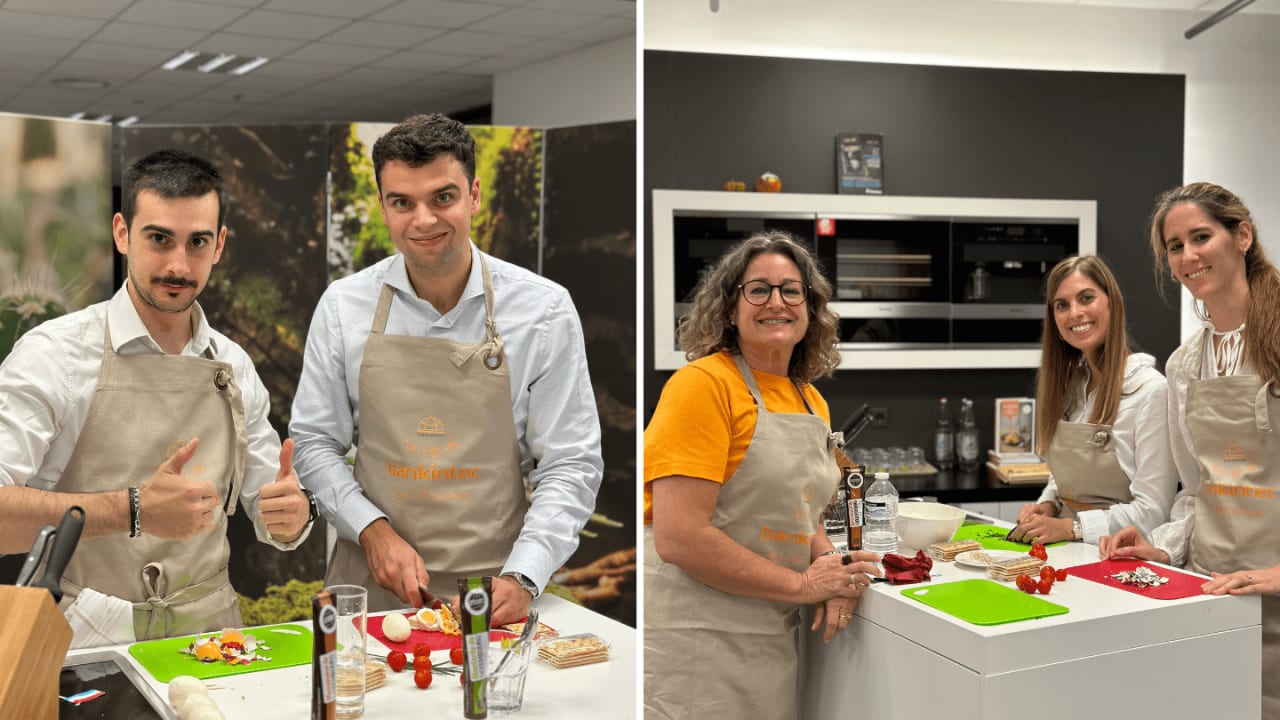
ChefPassport runs live, hosted virtual cooking team-building sessions designed explicitly for corporate teams. Here's what a typical session looks like:
Discovery call. We learn about your team size, goals, dietary needs, time zones and any cultural themes you want to explore. No generic package—every session is tailored.
Recipe selection. We propose a menu that balances accessibility, flavour and cultural richness. Recent examples: Thai green curry, Japanese gyoza, Moroccan tagine, Italian fresh pasta.
Kit delivery (optional). Pre-portioned, curated ingredient boxes arrive at participants' homes. They open the box five minutes before the session starts—no prep, no shopping list, no stress.
Live session. A professional chef-host guides everyone through the recipe in real time on Zoom or Teams. Participants cook together, ask questions in chat, share progress on camera and troubleshoot with encouragement. Sessions run 60–120 minutes depending on complexity.
Shared meal. Everyone eats together on screen. It's informal, conversational and consistently the moment where the best stories and laughter emerge.
Follow-up. Recipes, photos and a short feedback survey. Many teams ask participants to recreate the dish with family and share photos in Slack—extending the connection beyond the event itself.
We've facilitated sessions for distributed teams across six continents, multilingual squads in Luxembourg and hybrid groups where half the team is in-office and half at home. The format adapts because a live host can read the room and adjust in the moment—something no pre-recorded course can do.
Measuring success: what ROI looks like for virtual culinary team-building
Corporate buyers increasingly expect measurable outcomes, not just vibes. Here's what "ROI" looks like for a live virtual cooking session:
Attendance and participation. Camera-on rates, chat activity, completion rates. High-quality sessions consistently see 85–95% camera-on participation—a proxy for psychological safety and engagement.
Post-event NPS. "How likely are you to recommend this to a colleague?" scores above 8.5/10 indicate the session delivered value worth talking about.
Qualitative feedback. Comments like "I finally met people outside my pod," "I didn't know Sarah was so funny," or "This was the first time I felt part of the team" signal relationship-building that cascades into daily work.
Behaviour change. Do participants recreate the dish? Share the recipe? Reference the session in meetings weeks later? Durability matters.
Retention and morale proxies. While attribution is hard, companies that run regular connection rituals—cooking, icebreakers, shared experiences—report higher engagement scores and lower flight risk among participants. The Gallup and Workhuman research on recognition and retention underscores this link.
Compare this to an online culinary school subscription: completion rates tell you who finished Module 3, but they don't tell you whether anyone feels more connected to their colleagues.
Budgeting and pricing: what to expect
Online culinary school subscriptions typically range from £10–50/month per person for platform access, or £100–500 for standalone courses. For a 20-person team over three months, that's £600–3,000 depending on the tier—and you still need to coordinate participation, track engagement and hope people find time between meetings.
Live virtual cooking team-building sessions are priced per event, not per subscription cycle. A 90-minute facilitated session for 20 participants, including a professional chef-host, recipe curation and post-event support, typically runs £1,200–2,500 depending on complexity and whether ingredient kits are included. Kit shipping adds £15–35 per person depending on the menu and geography.
The trade-off: you're paying for a shared, synchronous experience with guaranteed facilitation, inclusive design and immediate team-cohesion outcomes. For organisations where budget constraints are the top challenge, the repeatability and low coordination overhead of live virtual sessions often make them more cost-effective than multi-month subscriptions that require internal project management.
Combining both: a blended approach
Some organisations layer both formats. Offer an online culinary school subscription as an always-on enrichment perk, then run quarterly live virtual cooking events to create shared team moments. The platform serves individual growth; the live sessions serve collective cohesion. Neither replaces the other, but for most teams with limited L&D budgets, starting with live sessions delivers faster, more visible ROI.
You can explore related formats in our guides to virtual icebreakers for remote teams and Zoom team-building games that actually work—complementary tactics that pair well with cooking experiences.
Making the choice: a decision tree
Ask yourself:
Is the primary goal skill development or connection? Skill → online culinary school. Connection → live virtual cooking.
Do you need synchronous participation or flexible self-pacing? Synchronous → live. Asynchronous → platform.
Is this a one-time milestone or an ongoing benefit? One-time or quarterly → live events. Ongoing library → platform subscription.
Do you have the internal capacity to coordinate asynchronous engagement? No → live session with full facilitation. Yes → platform plus occasional live gatherings.
What does success look like? "People feel closer and energised" → live. "Employees complete culinary modules" → platform.
Most corporate searchers exploring "online culinary school" land in the first camp: they want connection, not credentials. The vocabulary is borrowed from consumer edtech, but the need is team cohesion.
Next steps: designing your virtual culinary experience
If you're ready to explore a live virtual cooking session tailored to your team's culture, schedule and goals, ChefPassport offers discovery calls to map the right format, menu and logistics. Whether you're onboarding a new cohort, celebrating a milestone, reconnecting a distributed workforce or simply looking for a better alternative to another passive webinar, a professionally facilitated cooking experience delivers energy, inclusion and stories people carry forward.
We've run sessions for multinational teams across six continents, hybrid squads in Luxembourg and remote-first companies with participants in a dozen time zones. Every session is live, every menu is tailored, and every participant—regardless of skill level—leaves having cooked something they're proud to eat.
Explore our virtual team-building cooking class offering, or browse more ideas in our guide to virtual team engagement activities. When the goal is connection, not certification, choose the format built for teams—not for solo learners with a pause button.
Planning a team event?
ChefPassport runs hands-on cooking experiences for corporate teams — in person at Kachatelier, Luxembourg, and virtually worldwide. Instant price estimate on the site.
Frequently asked questions
Free guide
Team Building Menu & Pricing Guide
Menus, group sizes, formats and indicative pricing — everything you need to plan, in two PDFs. No spam, unsubscribe anytime.


