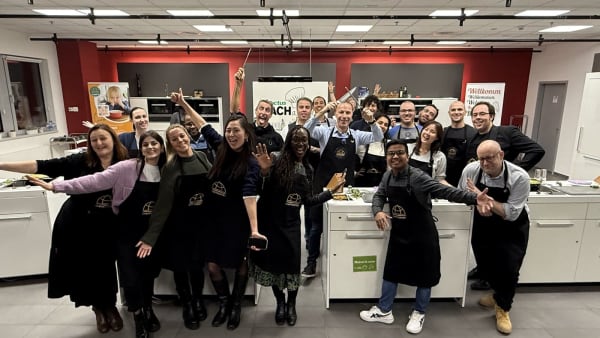

Employee engagement activities are structured, shared experiences designed to rebuild connection, strengthen collaboration and restore morale in teams — especially when engagement is low or the workforce is dispersed. The best activities put people in the same room, give them a meaningful goal and create space for authentic interaction.
Engagement matters now more than ever. Gallup's 2026 State of the Global Workplace report found that global employee engagement sits at just 20%, while manager engagement has fallen sharply — a backdrop that makes deliberate connection and re-engagement efforts essential, not optional.
Key takeaways
The most effective employee engagement activities combine a shared goal, active participation and a tangible outcome — not passive entertainment.
In-person formats rebuild trust and psychological safety faster than virtual ones, particularly for hybrid or newly formed teams.
Cooking team building drives communication, collaboration and creativity while delivering an immediate, shared achievement.
Thoughtful activity design — inclusive menus, clear structure and celebration of effort — determines success more than budget or venue.
Recognition, belonging and learning drive retention and performance; well-designed engagement activities deliver all three at once.
Why employee engagement activities matter in 2026
Employee engagement activities address a specific workplace challenge: the erosion of connection, trust and shared purpose that naturally occurs in distributed, hybrid or siloed teams. They give people a reason to interact beyond transactional work.
The data supports the urgency. McKinsey research found that three in four cross-functional teams underperform on key metrics — concentrated events that rebuild coordination and weak ties can unblock work the org chart cannot. Stronger workplace networks are linked to higher sponsorship, belonging and engagement — the "social capital" case for bringing people together.
After running hundreds of corporate events across Europe, we've seen what drives results: activities that ask participants to solve a real problem together, not just sit through an icebreaker. Teams need shared wins, not another trust fall.
What makes an engagement activity effective
Not all employee engagement activities deliver results. The most effective ones share four characteristics: a clear shared goal, active participation from everyone, immediate feedback and a tangible outcome the team can see or taste.
Shared goal. The activity must require collaboration to succeed. Individual tasks done in parallel don't build connection. Cooking a three-course meal together forces coordination, delegation and trust in ways a seated workshop cannot.
Active participation. Passive attendance — listening to a speaker, watching a demonstration — doesn't engage. Every participant needs a role. In our cooking team-building sessions in Luxembourg, smaller breakout teams create more participation than large-group formats.
Immediate feedback. Activities that offer real-time results keep energy high. Cooking delivers this naturally: you plate the dish, taste it, adjust seasoning and see the outcome within minutes.
Tangible outcome. Teams need something to celebrate. A shared meal, a solved challenge, a finished product. The sense of accomplishment boosts morale and strengthens team spirit, increasing job satisfaction.
In-person engagement activities vs virtual formats
In-person engagement activities rebuild trust and psychological safety faster than virtual ones. Face-to-face interaction allows for body language, spontaneous conversation and the kind of unscripted moments that strengthen relationships.
That said, virtual formats have earned their place. The global virtual-events market is estimated at $288.4 billion in 2026, and 53% of attendees plan to attend more webinars. Virtual works when teams are distributed, budgets are tight or you need frequent touchpoints. We run live, hosted virtual cooking classes worldwide for exactly this reason.
But for rebuilding fractured teams, onboarding new hires or solving stubborn cross-functional problems, in-person wins. 66% of event planners say face-to-face meetings are more valuable than before the pandemic — not because virtual is bad, but because in-person does things virtual cannot.
Cooking team building: why it works
Cooking team building works because it combines every element of effective engagement: a shared goal (a finished meal), active participation (everyone chops, stirs, plates), immediate feedback (taste and adjust) and a tangible outcome (the team eats what it made).
Here's what we've observed across hundreds of sessions:
Communication becomes essential. Cooking requires planning, delegation and real-time coordination. Team members must communicate clearly, listen actively and adapt when a recipe goes sideways. These are the same skills that drive workplace collaboration.
Collaboration feels natural. Cooking is inherently collaborative. You can't make a three-course meal alone in 90 minutes. Teams quickly learn to leverage each other's strengths — one person handles timing, another plates, a third troubleshoots.
Creativity emerges without pressure. Experimenting with ingredients and flavours promotes creativity and innovation. Participants try techniques they've never used, improvise when an ingredient runs out and surprise themselves with what they can create.
Trust builds through shared effort. Trust is the foundation of effective teamwork. Through cooking together, employees learn to trust each other's abilities, leading to improved collaboration and productivity back in the office.
Morale lifts immediately. Sharing a meal the team has prepared creates a sense of accomplishment and camaraderie. The act of sitting down together, tasting the results and celebrating the effort restores morale in ways a survey or poster campaign cannot.
Fun engagement activities for employees: practical examples
Effective employee engagement ideas don't require elaborate budgets or exotic locations. They require thoughtful design, clear structure and authentic participation.
Cooking challenges. Small teams compete to prepare the best version of a dish within a time limit. Judges (or the group) taste and score. This format drives energy, creativity and friendly competition.
DIY menu stations. Interactive elements like build-your-own taco bars, DIY pizza stations or dumpling-folding competitions make the experience hands-on and inclusive. Everyone contributes, regardless of skill level.
Regional cuisine exploration. Choose a menu that reflects your team's diversity or the location of your event. Our Luxembourgish cuisine sessions introduce teams to Judd mat Gaardebounen and Gromperekichelcher, sparking conversation about culture and tradition.

Problem-solving simulations. Give teams a basket of random ingredients and ask them to create a cohesive dish. This mirrors real workplace challenges: ambiguous briefs, limited resources, tight deadlines.
Seasonal and cultural celebrations. Tie activities to meaningful moments. A Chinese New Year dumpling-making session or a Luxembourg Christmas market-inspired menu adds relevance and celebration to the experience.
How to organise successful employee engagement activities
Organising effective employee engagement activities requires planning, but not perfection. Focus on logistics, inclusion and clear communication.
1. Choose the right venue. Select a space with adequate facilities for your team size. For cooking events, you need working kitchen stations, preparation surfaces and enough room for teams to move. Consider accessibility, parking and proximity to your office to maximise participation.
2. Plan an inclusive menu. Choose dishes that cater to diverse tastes and dietary restrictions. Ask about allergies, vegetarian or vegan preferences and cultural dietary requirements in advance. An inclusive menu signals that everyone belongs.
3. Structure the session clearly. Start with a brief introduction, demonstrate key techniques, then step back and let teams work. Build in checkpoints — moments to taste, adjust and regroup. End with a shared meal and time to reflect.
4. Encourage creativity and ownership. Provide opportunities for team members to showcase their ideas. Whether decorating plates, inventing a signature twist or naming the dish, fostering creativity fosters pride in the outcome.
5. Celebrate effort, not just results. Recognise the team's achievements throughout the process. From successfully executing a challenging recipe to overcoming obstacles together, acknowledge and appreciate each milestone. Well-recognised employees were 45% less likely to have changed employers two years later, according to Gallup and Workhuman research.
6. Keep group size intentional. Large groups dilute participation. Break teams into smaller units of 4–6 people, each with their own workstation and goal. Smaller groups create more interaction and accountability.
Common mistakes to avoid
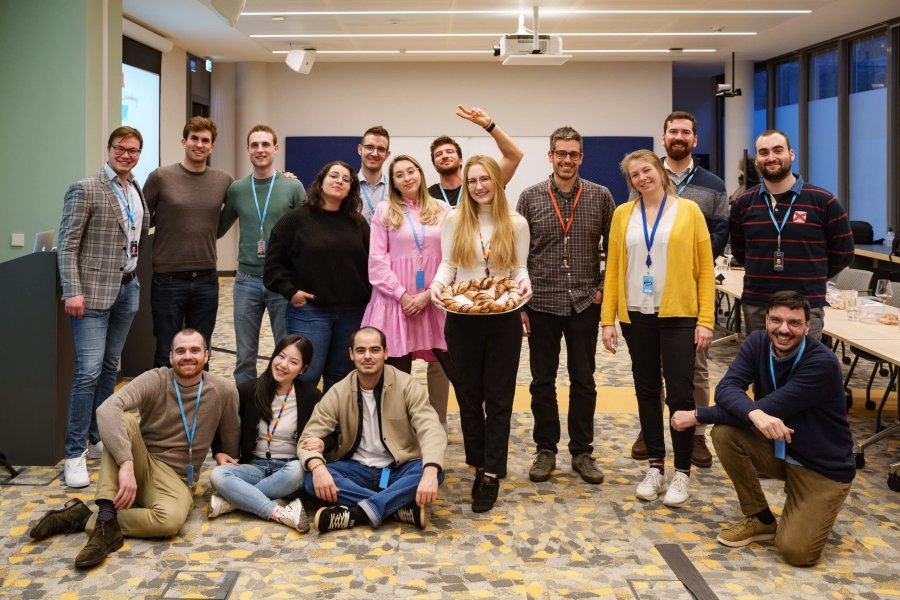
After hundreds of sessions, we've seen what derails engagement activities — and what prevents those mistakes.
Choosing activities that exclude. A wine-tasting excludes non-drinkers. A high-intensity physical challenge excludes those with mobility issues. Design for inclusion by default, not as an afterthought.
Skipping dietary and cultural considerations. Failing to ask about restrictions or cultural food taboos signals carelessness. Our guide to global food taboos helps teams navigate this thoughtfully.
Making it optional, then judging no-shows. If attendance is truly optional, respect that choice. If it's expected, communicate that clearly. Mixed signals erode trust.
Over-programming the schedule. The best moments happen in the margins — the unscripted conversation while chopping vegetables, the laughter when a sauce curdles. Leave room for spontaneity.
Forgetting follow-up. The activity ends, everyone goes home, and nothing changes. Effective engagement activities are part of a larger strategy. Reference the experience in team meetings, share photos, connect the skills practised to workplace challenges.

Measuring the impact of engagement activities
Measuring the return on employee engagement activities is harder than tracking a marketing campaign, but it's not impossible. Look for leading indicators, not just lagging ones.
Participation and energy. Did everyone engage, or did some stand back? High participation during the event predicts higher engagement after it.
Conversation quality. Did people talk about work, or did they learn something new about a colleague? The depth of conversation matters more than its volume.
Follow-up behaviour. Do team members reference the experience later? Do they collaborate more fluidly in meetings? Behaviour change is the real ROI.
Retention and sentiment. Track turnover, engagement survey scores and Glassdoor sentiment over time. Activities alone won't fix a toxic culture, but they contribute to the conditions that retain people.
Forty per cent of event organisers still struggle to prove event ROI — buyers increasingly expect measurable outcomes, not just attendance. Define success metrics before the event, not after.
When to use engagement activities strategically
Employee engagement activities deliver the most value when deployed at specific moments in the team lifecycle, not as random perks.
Onboarding new hires. New team onboarding activities help people bond quickly, learn unwritten norms and feel welcomed. A cooking session in week two accelerates social integration in ways a handbook cannot.
After a restructure or acquisition. When teams merge, old networks fracture. A shared experience rebuilds weak ties and signals a fresh start.
Hybrid team integration. Remote employees can be more engaged than some peers but are also more likely to report stress, sadness and loneliness, according to Gallup. Bringing distributed teams together in person — even once a quarter — strengthens relationships that sustain remote work.
Kick-off or milestone celebrations. Start a new quarter, celebrate a product launch or mark a difficult year with a shared win. The activity becomes a marker in the team's story.
When morale is visibly low. If you're seeing quiet quitting, disengagement or rising turnover, an engagement activity won't solve systemic problems — but it can signal that leadership cares and create space for honest conversation.
Why in-person cooking works for Luxembourg teams
Luxembourg's workforce is uniquely distributed and multilingual. Forty-seven per cent of employees are cross-border workers, 27.3% sometimes work from home (versus 13.3% across the EU27), and 12.7% usually do (versus 8.9% EU27), according to EURES labour market data. This creates an unusually fragmented workforce that needs intentional connection.
In-person cooking sessions bring people together across language, function and geography. A Portuguese engineer, a French analyst and a Luxembourgish project manager collaborate over a Thai curry or a local Bouneschlupp, building trust through shared effort.
We run corporate cooking classes in Luxembourg for teams at Amazon, Deloitte, the European Central Bank and JP Morgan — companies wrestling with hybrid work, cross-border coordination and the need to make culture feel real, not rhetorical.
Final thoughts: engagement as strategy, not perk
Employee engagement activities work when they're part of a deliberate strategy to rebuild connection, strengthen collaboration and restore morale — not when they're bolted on as a perk or a box-ticking exercise.
The best activities put people in the same room, give them a meaningful challenge and create space for authentic interaction. Cooking delivers all three. It's collaborative by design, inclusive by nature and immediately rewarding.
If you're ready to run a cooking team-building session that your team will actually remember, explore our in-person cooking classes in Luxembourg or our virtual cooking team-building experiences for distributed teams. Both formats are designed for real engagement, not performance.
Planning a team event?
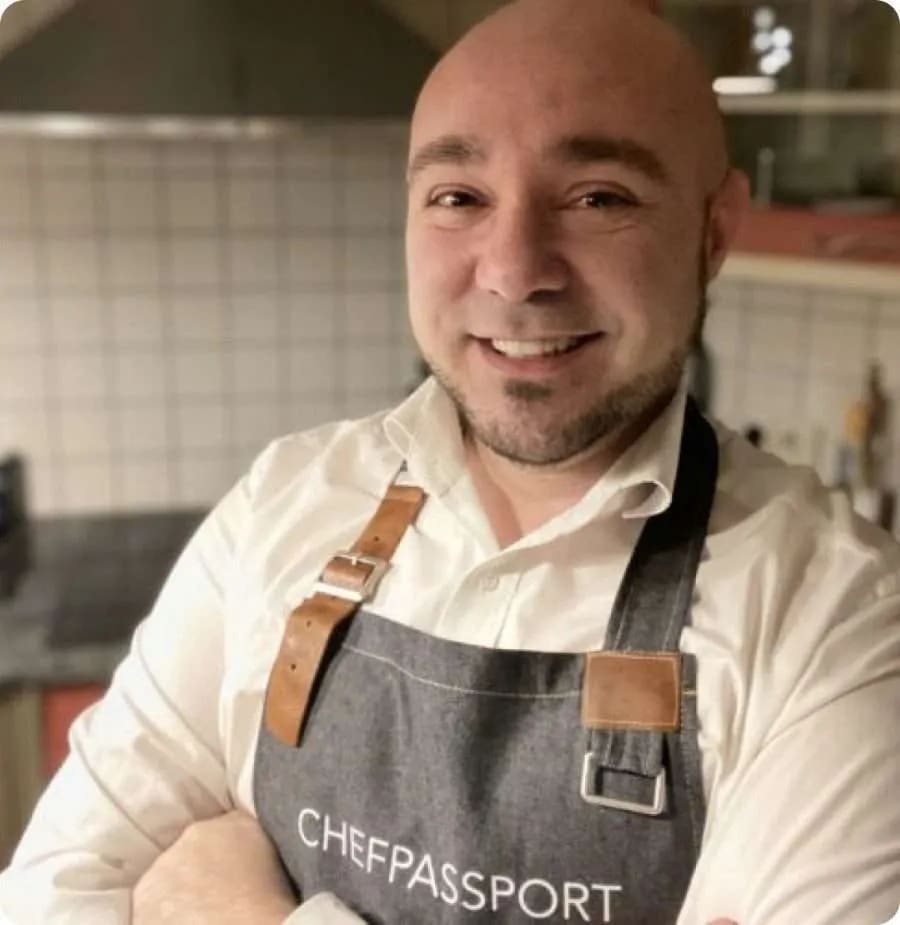
ChefPassport runs hands-on cooking experiences for corporate teams — in person at Kachatelier, Luxembourg, and virtually worldwide. Instant price estimate on the site.
Frequently asked questions
Free guide
Team Building Menu & Pricing Guide
Menus, group sizes, formats and indicative pricing — everything you need to plan, in two PDFs. No spam, unsubscribe anytime.