Key takeaways
- Heather The Cooking Musician is ChefPassport's newest chef, bringing intercultural understanding through regional cooking traditions from Maine to Taiwan.
- She specialises in culinary storytelling — teaching the history, ingredients and cultural context behind each dish in her virtual and in-person classes.
- Heather's signature style blends East Asian and Southern American techniques, shaped by her grandmother (an ex-private chef), her father's weekend bread-baking and her Taiwanese mother-in-law.
- She believes food is a universal language and the most genuine form of cultural diplomacy — ideal for multinational teams.
- ChefPassport clients can now book Heather to host virtual team building cooking classes that dive deep into regional cuisines and the stories they tell.
Who is Heather The Cooking Musician?
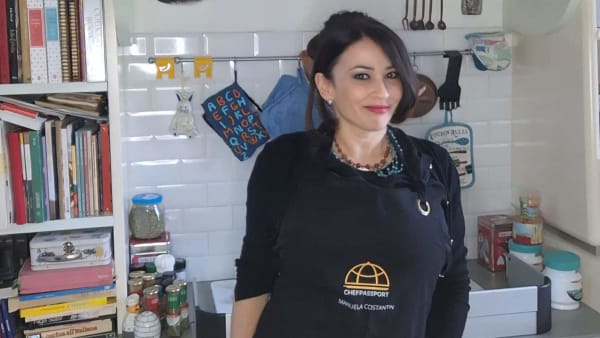
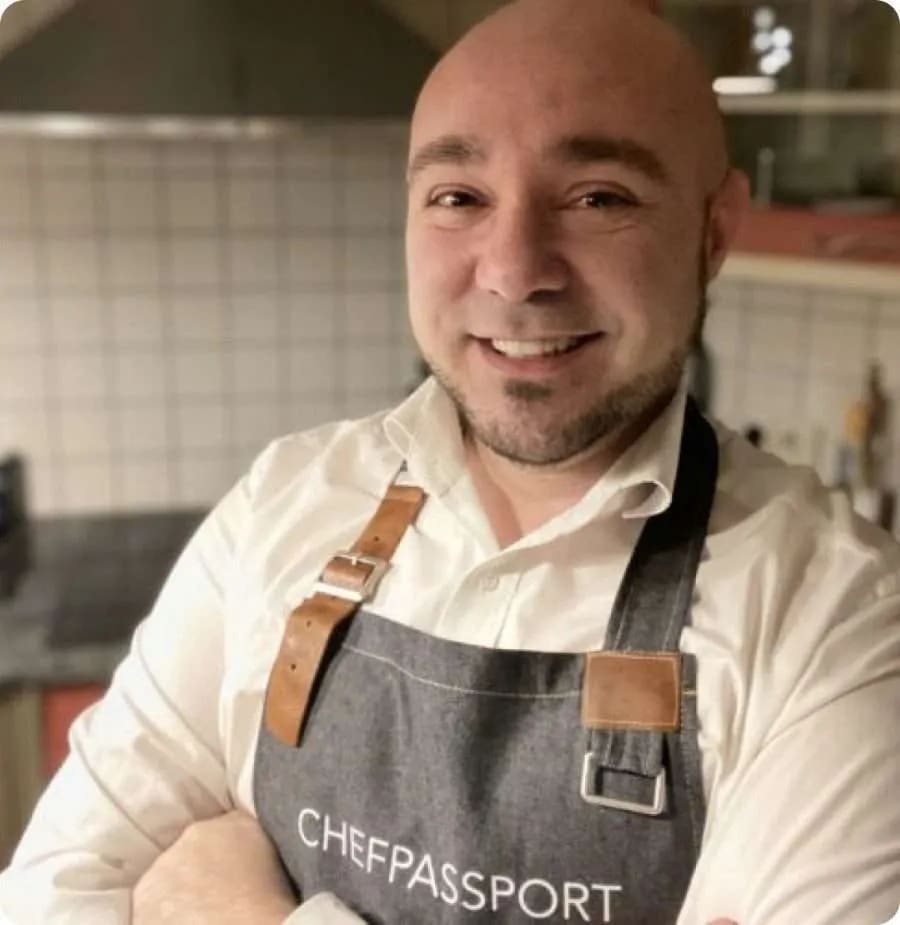
Heather The Cooking Musician is the newest addition to the ChefPassport family — a chef, culinary educator and storyteller whose mission is promoting intercultural understanding through food. Her teaching weaves together the history, ingredients and cultural context of every dish, from East Asian fried chicken to Southern buttermilk classics.
She's also a trained musician (hence the name), and that sensibility carries over: just as a piece of music has structure, phrasing and emotion, so does a recipe. Heather treats every dish as a narrative shaped by migration, tradition and the ingredients a region can grow.

Heather's culinary journey: from a Maine island to the ChefPassport kitchen
Heather's story with food began on an island off the coast of Maine. When she was six, her family moved there to stay with her grandparents. Her grandmother — an ex-private chef and bed-and-breakfast proprietor — was state-renowned for her culinary soirées. But her love went beyond just feeding people; it was a gesture of care.
"She believed in the therapeutic nature of food," Heather says. "Imagine a casserole magically appearing at your doorstep when you're feeling low; that's the kind of fairy she was. Her philosophy — that food nourishes the soul, not just the body — is deeply etched in my heart."
That philosophy runs through everything Heather teaches today. When she leads a virtual cooking class, participants aren't just learning technique — they're hearing the stories behind the dish, the ingredient swaps that travelled across continents, the hands that shaped the tradition.
Family influences: bread-baking, Bolivia and Taiwan
Heather's father baked bread every weekend — a ritual she still remembers vividly. Her uncle spent time in Bolivia and returned with a repertoire of dishes that opened her eyes to South American flavours. And her Taiwanese mother-in-law introduced her to the diverse culinary map of China, region by region.
"My first cookbook was a gift from her," Heather recalls. "It remains a prized possession."
These influences — Maine, the American South, East Asia, Latin America — converge in Heather's teaching. She doesn't pick one cuisine and stay there. She follows the food wherever it leads, because that's how culture actually moves: through trade routes, migration, marriage, curiosity.

Her signature dish: variations on fried chicken
Every chef has a dish they return to, and for Heather it's fried chicken — not one version, but many.
"Choosing a favourite is tough," she says. "But if I had to, variations on fried chicken would top the list. From East Asian to Southern fried chicken reminiscent of South Carolina — every style tells a story."
Heather's technique: East Asian vs Southern fried chicken
For her East Asian versions, Heather marinates chicken in ginger and mirin or soy sauce and five-spice, then coats it with potato starch. The result is a lighter, crispier crust with a subtle sweetness.
For Southern fried chicken, she uses a buttermilk marinade and a seasoned flour coating. It's richer, thicker, deeply savoury — the kind of dish that tastes like Sunday afternoon on a South Carolina porch.
Same bird. Same cooking method. Completely different cultural contexts. That's the kind of comparison Heather loves to teach, because it shows how food adapts to place, ingredient availability and tradition.
Why Heather joined ChefPassport: regional cooking meets remote teams
ChefPassport runs interactive cooking experiences for corporate teams — in-person events in Luxembourg and live, hosted virtual classes worldwide. Heather saw an opportunity to dive deeper into regional cooking with a genuinely global audience.
"Every dish has a story shaped by local ingredients, history and culture," she says. "To me, promoting intercultural understanding through food is the most genuine form of diplomacy. I can't wait to learn from the participants too. Every cuisine has its tale."
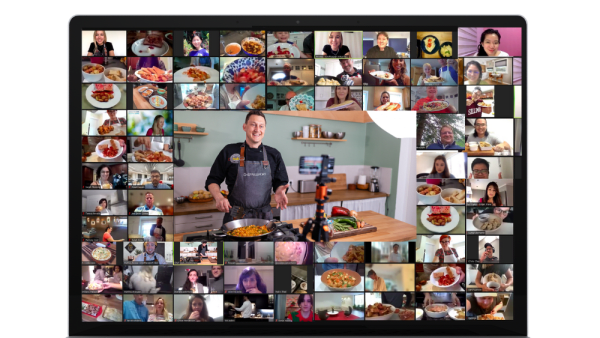
That two-way learning is central to how Heather runs a session. She doesn't lecture; she invites conversation. Participants share ingredient swaps, childhood food memories, regional variations they've encountered. The Zoom grid becomes a culinary map.
This matters particularly for multinational teams. In Luxembourg, 47% of employees are cross-border workers, and the workforce is unusually multilingual and distributed. Heather's classes offer a rare chance to celebrate that diversity rather than smooth over it.

Food as storytelling: the Oxford Food Symposium and a New Orleans funeral procession
Heather's philosophy — that cooking is storytelling — was crystallised at the Oxford Food Symposium, an annual gathering of food historians, chefs and researchers.
"One year, we celebrated the Oxford Food and Celebration symposium with diverse feasts," she recalls. "From a Mexican Day of the Dead meal to a Greek vegan feast. I played a New Orleans–style funeral procession on my trumpet, marking the transition of food from being 'dead' to its rebirth as a new feast."
The performance underscored the cyclical nature of food — waste becomes compost, compost becomes soil, soil becomes the next meal. It was both playful and profound, and it shaped how Heather thinks about sustainability and minimising waste in her classes.
When she teaches a ChefPassport session, she'll often mention where scraps can go: carrot tops into pesto, chicken bones into stock, stale bread into croutons. It's not a lecture on sustainability; it's simply how a good cook thinks.
Rediscovering the joy of home-cooked meals in a takeout world
In an age of Deliveroo and Just Eat, why bother cooking? Heather has a simple answer.
"True, sometimes it's tempting to just grab takeout," she says. "But nothing beats the simple joy of a mozzarella-tomato salad or a perfect omelette. Good-quality ingredients can transform the mundane into the sublime."
That ethos runs through every ChefPassport session. Participants receive fresh ingredient kits (for virtual events) or work with seasonal, local produce (in Luxembourg). The recipes aren't complicated — they're designed to be repeatable at home, with or without a chef watching.
After running hundreds of corporate cooking sessions, we've found that participants often cook the dish again within a week. Not because they were told to, but because it was genuinely easier and more satisfying than they expected. That's the kind of behaviour change a good class can unlock.

A culinary disaster (and a very understanding husband): the blackcurrant fiasco
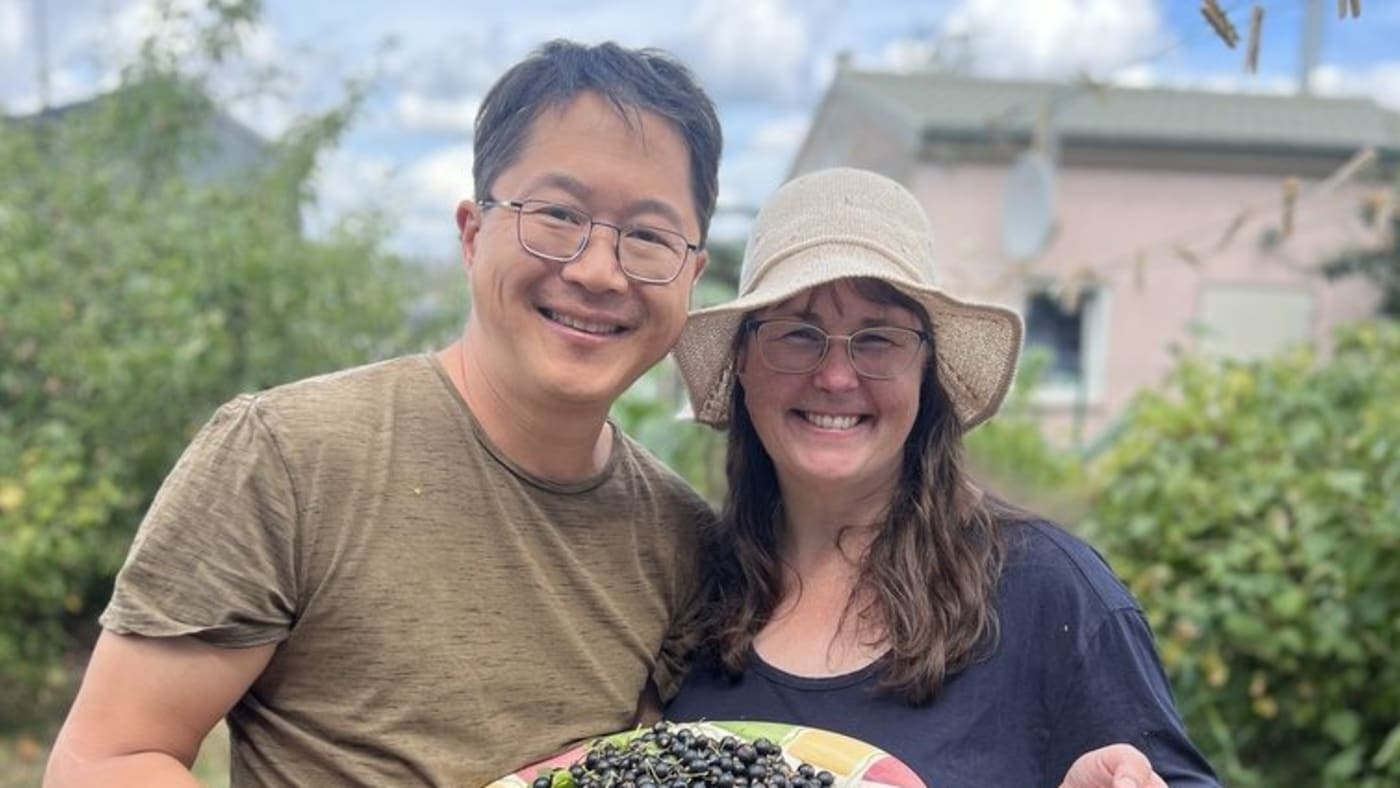
Every chef has a kitchen disaster story. Heather's involves blackcurrants, a makeshift bag and a dining room that looked like a crime scene.
"Picture this," she laughs. "A tide of dark purple juice flooding the dining room, and a scene that looked straight out of a crime thriller. Thank goodness for my ever-understanding husband, who took up the Herculean task of cleaning. Somewhere there's a photograph of the mess, always good for a chuckle."
It's a reminder that even experienced cooks have moments of chaos. Heather shares these stories in her classes — not to embarrass herself, but to normalise mistakes. Cooking is experimentation. Sometimes the bag breaks. You clean it up and carry on.
How ChefPassport clients can work with Heather The Cooking Musician
Heather is now available to host ChefPassport sessions — virtual and in-person — for corporate teams, offsites, onboarding cohorts and client events.
Her specialities include:
- Regional deep dives — East Asian cuisines (Taiwanese, Cantonese, Japanese), Southern American comfort food, Mediterranean traditions
- Technique-focused workshops — knife skills, dumpling folding, bread-baking, sauce fundamentals
- Cultural storytelling sessions — where the food is the starting point for conversations about migration, trade, identity and belonging
- Sustainability and zero-waste cooking — practical tips drawn from her Oxford Food Symposium experience
If you're organising a new team onboarding event, a quarterly offsite or a year-end celebration, Heather can design a menu and narrative arc that fits your team's makeup and goals.
For distributed teams, her virtual cooking classes work particularly well. Ingredient kits arrive at each participant's door; Heather hosts live, keeps the energy high and pivots in real time if someone's missing an ingredient or working from a tiny flat in London with no hob.
She's also a natural fit for multinational groups. If your Zoom grid spans Luxembourg, Mumbai, Singapore and São Paulo, Heather will find the culinary through-line — the shared technique, the ingredient that travelled, the dish that means home to half the room.
Why food is the universal language for team building
Heather's belief — that food is a universal language and the most genuine form of diplomacy — isn't just poetic. It's operationally true.
Food doesn't require fluency in corporate jargon. It doesn't rely on extroversion or physical ability. It meets people where they are: everyone eats, everyone has food memories, everyone can chop an onion (even if they've never done it before).
Research from McKinsey shows that three in four cross-functional teams underperform on key metrics — often because people don't know each other well enough to collaborate smoothly. Concentrated events that rebuild coordination and weak ties can unblock work the org chart cannot.
A cooking class does exactly that. You're paired with someone from another department. You're both holding a whisk. You're both slightly nervous. You succeed together or you laugh together. Either way, the next Slack message feels easier.
Global employee engagement sits at 20%, and manager engagement has fallen sharply. Remote employees can be more engaged than some peers but are also more likely to report stress, sadness and loneliness. Shared experiences — even virtual ones — create the connection that distributed work often lacks.
What to expect in a session with Heather
Heather's teaching style is warm, conversational and detail-oriented. She'll start with the story: where the dish comes from, what it meant historically, how it travelled. Then she'll walk through the technique step by step, pausing to check in, answer questions and troubleshoot.
She's also funny. Expect trumpet references, Maine island anecdotes and the occasional detour into food history trivia. But it never feels like a lecture — it feels like cooking with a friend who happens to know a lot.
Participants often say they remember not just the recipe, but the reason behind each step. Why do you rest the dough? Why does potato starch give a different texture than flour? Why does buttermilk tenderise chicken? Heather answers the why, not just the what.
Book a session with Heather The Cooking Musician
If you're planning a team event and want a chef who treats food as culture, not just fuel, Heather is an excellent fit. She's available for virtual team building cooking classes worldwide and in-person sessions in Luxembourg.
Whether you're onboarding a distributed cohort, celebrating a milestone or simply looking for an event that feels different — one that teaches, connects and tastes good — Heather The Cooking Musician brings the kind of warmth, expertise and storytelling that turns a one-hour Zoom into a shared memory.
Ready to cook with Heather? Explore ChefPassport's cooking experiences or get in touch to design a custom session for your team.
Planning a team event?
ChefPassport runs hands-on cooking experiences for corporate teams — in person at Kachatelier, Luxembourg, and virtually worldwide. Instant price estimate on the site.
Frequently asked questions
Free guide
Team Building Menu & Pricing Guide
Menus, group sizes, formats and indicative pricing — everything you need to plan, in two PDFs. No spam, unsubscribe anytime.