
Key takeaways
- A Chief Happiness Officer (CHO) is responsible for fostering workplace wellbeing, employee engagement and a culture that supports both individual and organisational goals.
- The role emerged at Google in the early 2000s, recognising that competitive salaries and benefits alone are not enough to retain motivated, productive teams.
- CHOs differ from HR: they act as a dedicated listening channel, focus on the employee experience day to day, and address the cultural and emotional dimensions of work that formal HR processes often miss.
- Research by Gallup shows that global employee engagement sits at just 20%, making intentional efforts to rebuild connection and morale more important than ever.
- Experiential activities like team-building cooking classes give CHOs a practical tool to strengthen belonging, trust and shared purpose beyond desk-based initiatives.
What is a Chief Happiness Officer?
A Chief Happiness Officer (CHO)—sometimes known as a chef happiness officer or happiness manager—is the person responsible for shaping and maintaining a workplace culture in which employees feel valued, engaged and genuinely motivated to contribute. Unlike traditional HR roles that focus on compliance, contracts and benefits administration, the CHO concentrates on the lived employee experience: the daily interactions, the emotional climate and the policies that determine whether people wake up looking forward to work or dreading it.
The role can sit within the HR department or operate as a standalone function reporting directly to leadership. In some organisations the CHO is the CEO or COO; in others it's an elected or appointed team member who brings psychology, sociology or organisational-development expertise. Regardless of structure, the mission remains the same: to build an environment where happiness at work is not an accident but a deliberate outcome.

The origin of the Chief Happiness Officer role
The CHO position first appeared at Google in the early 2000s, in the heart of Silicon Valley's war for talent. Google recognised that even generous compensation and impressive perks could not guarantee sustained performance if people felt disconnected, undervalued or burned out. The company needed someone whose entire remit was to protect and improve the employee experience—someone who would ask, "Are our people genuinely happy here, and if not, what can we change?"
The experiment worked. Other tech companies followed, and the role has since spread beyond Silicon Valley into finance, professional services, retail and multinational corporations. The underlying insight remains relevant: when you treat employee wellbeing as a strategic priority rather than a perk, you unlock discretionary effort, creativity and loyalty that no amount of process optimisation can produce on its own.
Why a Chief Happiness Officer matters now
According to Gallup's 2026 State of the Global Workplace report, global employee engagement sits at just 20%, and manager engagement has fallen sharply. At the same time, McKinsey research finds that three in four cross-functional teams underperform on key metrics, suggesting that org charts and processes alone cannot solve collaboration problems.
A CHO addresses the gaps that systems and structure miss. They listen for the signals that formal surveys often overlook—burnout in a high-performing team, friction between departments, or a sense of disconnection among remote and hybrid employees. They then design interventions—recognition programmes, shared experiences, cultural rituals, policy changes—that rebuild trust, belonging and purpose.

Happiness is not a soft metric. Research by Oxford University found a conclusive link between happiness and productivity: happy employees are 13% more productive. Happiness leads to greater engagement, better attention to client needs and deeper understanding of how the organisation's systems and goals connect. All of these factors combine to improve both productivity and profitability.
In our experience running team-building cooking classes in Luxembourg and virtual cooking experiences for multinational teams, we see this dynamic play out clearly. When people cook together—cutting vegetables, troubleshooting a sauce, plating a dish they're proud of—they relax, collaborate naturally and rediscover colleagues as real people rather than Slack avatars or meeting tiles. That shared positive experience creates goodwill and trust that carries over into everyday work.
How a Chief Happiness Officer differs from HR
Human Resources manages the lifecycle of employment: recruitment, onboarding, payroll, benefits, compliance with labour law, performance reviews, offboarding. HR is the engine room that ensures the organisation runs legally and fairly. It's essential, process-driven work.
A Chief Happiness Officer, by contrast, focuses on how it feels to work here. They meet regularly with team members—not to process paperwork but to listen. Employees may feel hesitant to raise concerns with their HR manager, especially if the issue is cultural rather than contractual: a manager who ignores contributions, a team that feels invisible, or a policy that inadvertently alienates remote workers.
The CHO acts as a safe, informal channel. They can surface problems early—issues around commute costs, childcare clashes with meeting times, or unspoken tension between departments—and work with leadership to address them before they become resignation triggers. Where HR enforces policy, the CHO shapes the experience around that policy.
| Aspect | Chief Happiness Officer | Human Resources |
|---|---|---|
| Primary focus | Employee experience, wellbeing, engagement and culture | Compliance, contracts, benefits, recruitment and process |
| Typical activities | Pulse surveys, listening sessions, recognition, team experiences, culture initiatives | Payroll, onboarding, performance reviews, benefits admin, labour-law compliance |
| Reporting relationship | Often direct to CEO/COO or within HR, depending on structure | Usually reports to CHRO or senior leadership |
| Measure of success | Engagement scores, retention, morale, psychological safety, employee Net Promoter Score | Time to hire, turnover rate, compliance audits, benefits participation |
| Employee interaction | Frequent, informal, conversational | Transactional, milestone-driven (onboarding, review, exit) |
In practice, the best outcomes happen when HR and the CHO work closely together. HR provides the structure; the CHO ensures the structure serves people rather than constraining them.
Top responsibilities of a Chief Happiness Officer

The CHO's remit is broad, but a few core duties appear consistently:
Listening and measuring employee sentiment
The CHO runs pulse surveys, organises listening sessions and conducts one-to-one check-ins to understand how people genuinely feel about their work, their team and the organisation. They look for patterns—spikes in stress, pockets of disconnection, teams that feel unsupported—and flag them to leadership.
Designing and delivering recognition programmes
Recognition matters. Gallup and Workhuman research found that well-recognised employees were 45% less likely to have changed employers two years later. The CHO ensures recognition is timely, specific, meaningful and equitable—not just generic "employee of the month" schemes.
Organising team-building and shared experiences
The CHO curates experiences that bring people together in ways that feel human rather than obligatory. After running hundreds of employee engagement activities, we've found that hands-on, collaborative formats—like cooking a meal together—create more genuine connection than passive lectures or forced icebreakers. A shared challenge (getting a sauce to emulsify, timing three dishes to finish simultaneously) breaks down hierarchy and lets people see one another's resourcefulness, humour and competence in a new light.
Championing culture and values
The CHO translates abstract company values into tangible behaviours and rituals. If "collaboration" is a stated value, the CHO designs initiatives that reward cross-functional problem-solving. If "inclusivity" matters, they audit events and policies to ensure no one is inadvertently left out.
Advocating for policy changes that improve daily life
The CHO spots friction points—rigid meeting hours that penalise parents, travel-reimbursement delays that hurt lower-paid staff, lack of quiet space for focused work—and pushes leadership to fix them. Small changes can deliver outsized improvements in morale.
Supporting mental health and wellbeing
The CHO ensures employees know what support is available (EAP programmes, flexible working, mental-health days) and creates a culture in which using that support is normalised rather than stigmatised.
Qualities and skills a Chief Happiness Officer needs
To be effective, a CHO must be genuinely convinced of the value of their work—or they will lack credibility with colleagues and leadership. Infectious enthusiasm, warmth and emotional intelligence are essential; people need to feel safe opening up. But the role also demands data literacy (to measure engagement and ROI), systems thinking (to spot root causes rather than symptoms) and diplomatic skill (to advocate for change without alienating decision-makers).
A CHO leads by example. If they preach work-life balance but answer emails at midnight, the message rings hollow. Authenticity and consistency matter more than charisma.
Employee freedom and psychological safety raise commitment

One of the subtler but most powerful levers a CHO controls is the degree of autonomy employees experience. Peer-reviewed research links psychological safety—the belief that you can speak up, take interpersonal risks and make mistakes without punishment—to learning behaviour, team efficacy and innovative performance.
When people feel trusted to make decisions, experiment and occasionally fail, they invest more of themselves in the work. When every action requires approval or carries the threat of blame, they withdraw into compliance. The CHO shapes the cultural norms—how mistakes are discussed, how dissent is welcomed, how credit is shared—that determine which mode prevails.
In team-building contexts, we see this dynamic clearly. A well-designed cooking class gives participants real autonomy: they choose ingredients, adjust seasoning, plate creatively. The instructor guides but does not micromanage. That freedom—combined with the shared accountability of cooking for your colleagues—mirrors the psychological contract high-performing teams need at work.
How team-building experiences support the CHO's mission
The best CHOs understand that engagement is not built through posters and slogans but through repeated, positive shared experiences. Team-building events—especially hands-on, collaborative formats—serve several strategic purposes:
- They rebuild weak ties. In hybrid and cross-functional teams, people often work alongside colleagues they barely know. Cooking a meal together creates the informal conversation and mutual reliance that turn strangers into trusted collaborators.
- They surface hidden strengths. The person who never speaks in meetings might be a natural organiser in the kitchen; the senior leader who intimidates in the boardroom becomes approachable when they're struggling to chop an onion. These moments humanise hierarchy.
- They create positive shared memory. Teams bond over stories—"remember when the sauce split and we salvaged it?" These narratives become cultural glue.
- They demonstrate investment. Allocating time and budget to a thoughtful experience signals that leadership values the team's wellbeing and cohesion, not just their output.
We've delivered virtual cooking classes for distributed teams at companies like Amazon, Google and Deloitte, and in-person sessions in Luxembourg for local and multinational clients. The format works because it balances structure (a recipe, a timeline) with agency (how you season, how you plate), creating the conditions for both achievement and authentic connection.
For a CHO looking to strengthen onboarding, a new-team cooking experience can accelerate trust-building in ways that desk-based orientation cannot. For a team recovering from a difficult quarter or a restructure, a shared meal offers a reset—a chance to celebrate resilience and look forward together.
Measuring the impact of a Chief Happiness Officer
Like any strategic role, the CHO must demonstrate ROI. Common metrics include:
- Employee engagement scores (tracked via regular pulse surveys)
- Voluntary turnover rate and retention of high performers
- Participation rates in wellbeing programmes, recognition schemes and team events
- Employee Net Promoter Score (eNPS): "Would you recommend this company as a place to work?"
- Absenteeism and sick leave trends
- Qualitative feedback from exit interviews and stay interviews
The challenge is attribution. A drop in turnover might reflect market conditions, compensation changes or a new manager—not solely the CHO's work. The most credible CHOs pair quantitative data with narrative evidence: testimonials, case studies of teams that improved after intervention, and before-and-after sentiment analysis.
Bizzabo's 2026 Event Marketing Statistics report that 40% of organisers still struggle to prove event ROI (down from 70% in 2025), highlighting that measurement remains an industry-wide challenge. The CHO who can tie engagement initiatives to retention, productivity or innovation outcomes will earn leadership's sustained support.
Should your organisation hire a Chief Happiness Officer?
Not every company needs a dedicated CHO. In small teams, the founder or a senior manager may naturally fill the role. In organisations with strong, empathetic people-leaders and a culture of psychological safety, the functions of a CHO may already be distributed across leadership.
But for mid-sized and large organisations—especially those with distributed teams, rapid growth, recent restructuring or cultural challenges—a CHO can be transformative. The role works best when:
- Leadership genuinely values employee wellbeing and is willing to act on feedback, not just collect it.
- The CHO has authority and budget to design and deliver initiatives, not just run surveys.
- The organisation measures and rewards cultural outcomes alongside financial ones.
- The CHO collaborates closely with HR, rather than duplicating or competing with it.
If your engagement scores are falling, your best people are leaving, or your teams feel disconnected despite your best process improvements, a CHO—or at minimum, someone owning the employee-experience remit—is worth serious consideration.
Final thoughts: happiness as a strategic lever
The Chief Happiness Officer role emerged because competitive advantage increasingly depends on discretionary effort, creativity and collaboration—qualities you cannot extract through process or policy alone. Happy employees do not simply comply; they contribute. They spot problems, propose solutions, mentor colleagues and stay when competitors come calling.
A CHO's work is never finished. Culture is not a project with a completion date; it is the emergent result of a thousand daily interactions, policies and norms. The CHO's job is to shape those conditions so that the default experience is one of trust, belonging and purpose rather than stress, isolation and cynicism.
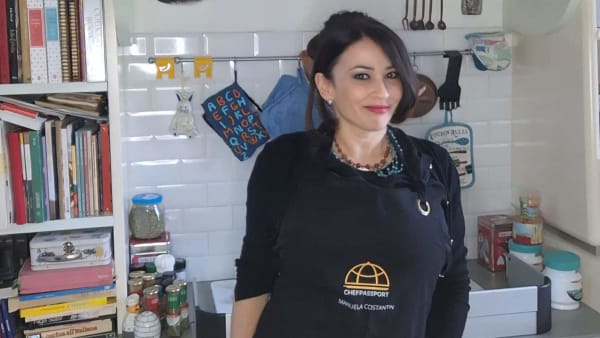
In our work at ChefPassport, we've seen how even a single well-designed shared experience—a team cooking a meal together, guided by an expert, with space for laughter and problem-solving—can shift the mood and dynamic of a group. It is not a silver bullet, but it is a tangible, memorable investment in the relationships that make work meaningful.
If you are a CHO—or thinking of becoming one—your mission is to make that investment systematic, not accidental. And if you lead a team and are wondering whether happiness at work really matters, the evidence is clear: it does. The only question is whether you will leave it to chance or treat it as the strategic priority it deserves to be.
Looking for a team-building experience that genuinely strengthens connection and morale? Explore our corporate cooking classes in Luxembourg or our hosted virtual cooking experiences for distributed teams worldwide.
Planning a team event?
ChefPassport runs hands-on cooking experiences for corporate teams — in person at Kachatelier, Luxembourg, and virtually worldwide. Instant price estimate on the site.
Frequently asked questions
Free guide
Team Building Menu & Pricing Guide
Menus, group sizes, formats and indicative pricing — everything you need to plan, in two PDFs. No spam, unsubscribe anytime.