

The best Thanksgiving recipes are the ones people expect to see—roast turkey, herb stuffing, creamy mashed potatoes, sweet potato casserole, green beans and pumpkin pie. They work because they've been tested across generations, refined in hundreds of home kitchens and adapted just enough to stay relevant without losing the core flavour that makes Thanksgiving feel like Thanksgiving.
This guide walks through six cornerstone dishes with clear ingredient lists, tested techniques and the historical context that explains why these recipes became traditions in the first place. Whether you're cooking for family, hosting a team potluck or running a virtual team building cooking class around Thanksgiving themes, these recipes deliver.
Key takeaways
- Heritage roasted turkey remains the centrepiece—butter under the skin, basted every 30 minutes, rested before carving.
- Classic stuffing balances herbs, stale bread and moisture; bake outside the bird for food safety and crisp edges.
- Mashed potatoes need starchy Russets, hot milk and patience—no food processor.
- Sweet potato casserole, green bean casserole and pumpkin pie round out the menu with texture, colour and familiarity.
- After running hundreds of team cooking events, we've found Thanksgiving menus work brilliantly for distributed teams—nostalgic, forgiving and highly collaborative.
Why these six dishes define the Thanksgiving table
Thanksgiving wasn't codified by royal decree. The menu evolved slowly, shaped by what was available, affordable and scalable for a crowd. Turkey was native to North America and large enough to feed extended family. Stuffing used day-old bread—waste nothing. Mashed potatoes were cheap, filling and required no special skill. Sweet potatoes, green beans and pumpkin were harvest staples.
By the time Sarah Josepha Hale successfully campaigned to make Thanksgiving a national holiday in 1863, these dishes had already become cultural shorthand for gratitude, abundance and home. They remain the foundation because they're approachable, adaptable and—crucially—they taste good together.
Heritage roasted turkey: the centrepiece done right
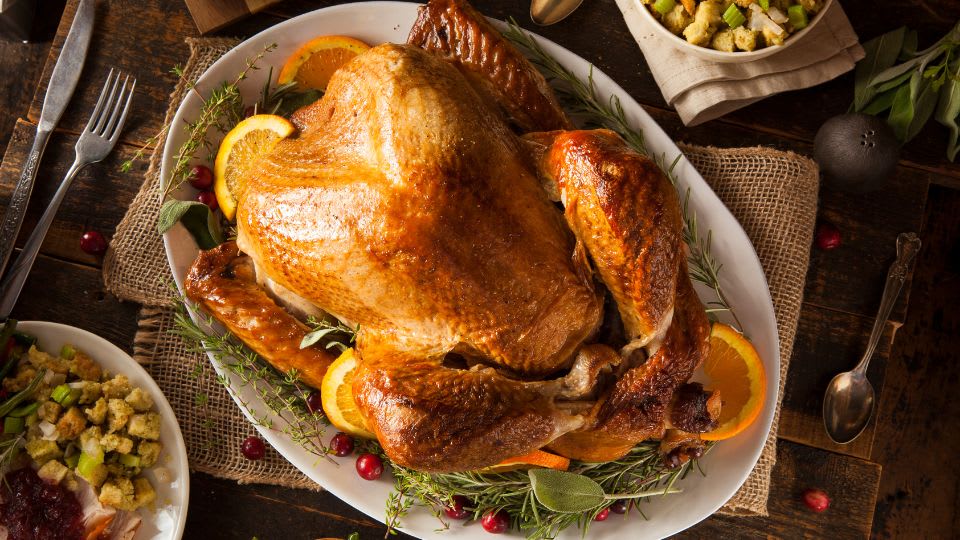
A well-roasted turkey is golden-brown, moist and fragrant with herbs. The tradition of serving turkey on Thanksgiving dates to the early 19th century, though it's debated whether turkey appeared at the 1621 feast. By the time the holiday became official, turkey had become the default—it was native, affordable and large enough to anchor a communal meal.
Ingredients
- Whole turkey (5–6 kg / 11–13 lbs)
- Unsalted butter (200 g / 1 cup), softened
- Fresh thyme (30 g / 1 oz)
- Fresh rosemary (30 g / 1 oz)
- Garlic (30 g / 10 cloves, minced)
- Lemon (1, zested and juiced)
- Salt and pepper (to taste)
- Olive oil (50 ml / ¼ cup)
Method
- Preheat and bring to room temperature: Set your oven to 325°F (163°C). Remove the turkey from the fridge an hour before cooking so it roasts evenly.
- Prepare herb butter: Mix softened butter with minced garlic, lemon zest, chopped thyme, rosemary, salt and pepper. Gently loosen the skin over the breast and spread the herb butter underneath—this keeps the meat moist and infuses flavour.
- Season the outside: Brush the turkey with olive oil, season generously with salt and pepper, and drizzle with lemon juice.
- Roast and baste: Place the turkey in a roasting pan, tuck the wings under and tie the legs. Roast for 3–4 hours depending on size, basting every 30 minutes with pan juices. The internal temperature should reach 165°F (74°C) at the thickest part of the thigh.
- Rest before carving: Let the turkey rest for at least 20 minutes after removing it from the oven. This allows juices to redistribute, ensuring every slice is moist.
After running hundreds of cooking team-building sessions, we've found that roasting turkey intimidates people less than they expect—it's mostly patience and a reliable thermometer. For a modern twist, Chef Gordon Ramsay's version includes a bacon, onion and lemon stuffing that adds savoury depth; you can explore his method here.
Classic Thanksgiving stuffing: herbs, bread and tradition

Stuffing—also called dressing in parts of the United States—is as essential as the turkey itself. The dish began centuries ago as a way to stretch ingredients and add flavour to roasted meat. In the American South, cooks add sausage and pecans; in the North, wild rice and dried cranberries. The versatility is what keeps stuffing relevant: every family adapts it, yet the core remains stale bread, aromatics and herbs.
Ingredients
- Dry bread cubes (450 g / 10 cups)
- Unsalted butter (115 g / ½ cup)
- Onion (1 large, diced)
- Celery (4 stalks, diced)
- Garlic (3 cloves, minced)
- Fresh parsley (¼ cup, chopped)
- Fresh sage (2 tbsp, chopped)
- Fresh thyme (1 tbsp, chopped)
- Chicken broth (475 ml / 2 cups)
- Eggs (2, beaten)
- Salt and pepper (to taste)
Method
- Dry the bread: If you're not using pre-dried cubes, cube your bread and leave it out overnight, or toast it lightly in the oven until dry.
- Sauté aromatics: Melt butter in a large skillet over medium heat. Add onions, celery and garlic; cook until soft and fragrant, about 5 minutes.
- Add herbs: Stir in parsley, sage and thyme. Cook for another 1–2 minutes to release the oils.
- Combine and moisten: In a large bowl, toss the bread cubes with the vegetable-herb mixture. Gradually add chicken broth and beaten eggs, stirring gently until the bread is evenly moistened but not soggy.
- Bake: Transfer to a greased baking dish. Bake at 350°F (175°C) for 40–45 minutes, until the top is golden and crisp.
We recommend baking stuffing outside the bird—it's safer, easier to time and you get more of the crispy edges everyone fights over. For a gourmet version with apples, sausage and cranberries, Chef Ina Garten's recipe adds sweet and savoury complexity.
Creamy mashed potatoes: comfort in a bowl

Mashed potatoes are synonymous with comfort. Their creamy texture and buttery richness balance the savoury turkey and herbed stuffing. The dish is simple—boiled potatoes, butter, milk, salt—but technique matters. Use starchy Russet potatoes for fluffiness, mash by hand (not in a food processor, which turns them gluey), and add hot milk so the texture stays smooth.
Ingredients
- Russet potatoes (1.5 kg / 3 lbs), peeled and quartered
- Unsalted butter (115 g / ½ cup)
- Whole milk or cream (240 ml / 1 cup), warmed
- Salt and white pepper (to taste)
- Fresh chives or parsley (optional, for garnish)
Method
- Boil the potatoes: Place quartered potatoes in a large pot of cold salted water. Bring to a boil, then reduce heat and simmer until fork-tender, about 15–20 minutes.
- Drain and steam dry: Drain the potatoes and return them to the pot over low heat for 1–2 minutes to evaporate excess moisture.
- Mash and add butter: Mash the potatoes with a potato masher or ricer. Stir in butter until melted.
- Add warm milk: Gradually add the warmed milk, stirring until you reach your preferred consistency. Season with salt and white pepper.
- Serve: Garnish with fresh chives or parsley if desired.
Mashed potatoes are forgiving and scale beautifully—perfect for team events where you need a dish that can sit warm without suffering. In our virtual team building activities, we often pair mashed potatoes with gravy as a make-ahead component that participants can reheat while the turkey rests.
Sweet potato casserole: the sweet side of Thanksgiving
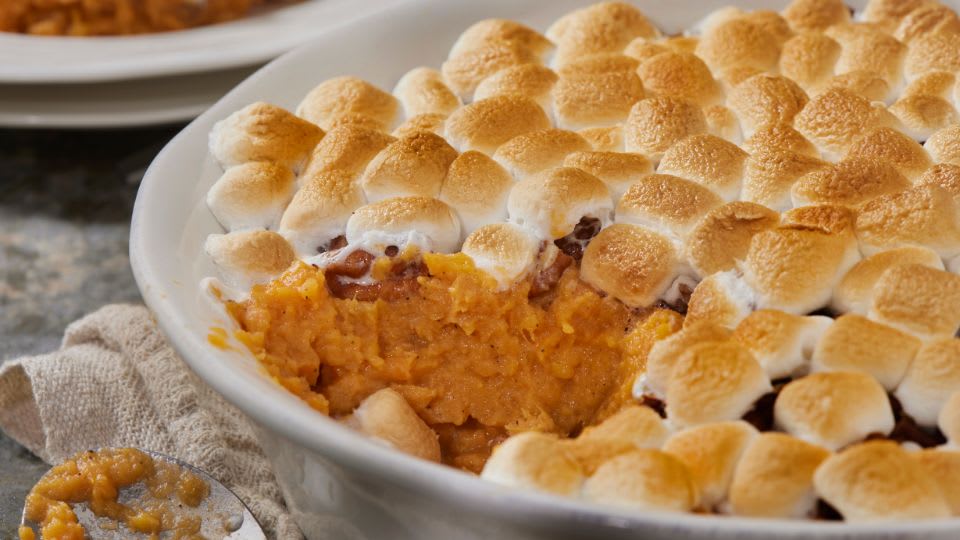
Sweet potato casserole walks the line between side dish and dessert. The classic version is mashed sweet potatoes topped with toasted marshmallows—a dish that became popular in the early 20th century when marshmallows were marketed as a modern convenience ingredient. Some prefer a pecan streusel topping for a less sweet, more textured finish.
Ingredients
- Sweet potatoes (1.2 kg / 2.5 lbs), peeled and cubed
- Unsalted butter (60 g / ¼ cup), melted
- Brown sugar (100 g / ½ cup)
- Milk (60 ml / ¼ cup)
- Eggs (2, beaten)
- Vanilla extract (1 tsp)
- Ground cinnamon (½ tsp)
- Salt (¼ tsp)
- Topping: mini marshmallows (about 300 g / 3 cups) or pecan streusel
Method
- Cook the sweet potatoes: Boil sweet potato cubes in salted water until tender, about 15 minutes. Drain well.
- Mash and mix: Mash the sweet potatoes, then stir in melted butter, brown sugar, milk, beaten eggs, vanilla, cinnamon and salt until smooth.
- Transfer and top: Spread the mixture into a greased baking dish. Top with marshmallows or pecan streusel.
- Bake: Bake at 350°F (175°C) for 25–30 minutes, until the topping is golden and the casserole is bubbling.
Sweet potato casserole is polarising—some love the marshmallow sweetness, others prefer savoury sides—but it's undeniably Thanksgiving. In team cooking events, it's a low-stress dish that gives less confident cooks a win.
Green bean casserole: the crunchy, creamy classic

Green bean casserole is an American invention—created in 1955 by the Campbell Soup Company test kitchen—and it stuck because it's easy, uses pantry staples and delivers creamy, crunchy satisfaction. Fresh green beans are blanched, tossed with cream of mushroom soup, then topped with crispy fried onions.
Ingredients
- Fresh green beans (900 g / 2 lbs), trimmed
- Cream of mushroom soup (2 cans, about 600 g total)
- Milk (120 ml / ½ cup)
- Soy sauce (1 tbsp)
- Black pepper (¼ tsp)
- Crispy fried onions (350 g / 2⅔ cups, divided)
Method
- Blanch the beans: Bring a large pot of salted water to a boil. Add green beans and cook for 5 minutes, until bright green and just tender. Drain and set aside.
- Make the sauce: In a large bowl, mix cream of mushroom soup, milk, soy sauce, black pepper and half the fried onions.
- Combine and bake: Fold in the green beans, then transfer to a greased baking dish. Bake at 350°F (175°C) for 25 minutes.
- Top and finish: Sprinkle the remaining fried onions on top and bake for another 5 minutes, until golden and bubbling.
Green bean casserole is nostalgic, crowd-pleasing and reheats well—ideal for potlucks or seasonal team celebrations where dishes need to travel.
Pumpkin pie: the sweet, spiced finale

Pumpkin pie is the Thanksgiving dessert—smooth, spiced and autumnal. The filling is a custard of pumpkin purée, eggs, cream and warm spices (cinnamon, ginger, nutmeg, cloves), baked in a flaky pastry crust. Pumpkin has been part of American harvest cooking since colonial times, and by the 19th century, pumpkin pie had become the traditional close to Thanksgiving dinner.
Ingredients
- Pre-made or homemade pie crust (9-inch)
- Pure pumpkin purée (425 g / 15 oz can)
- Sweetened condensed milk (400 g / 14 oz can)
- Eggs (2, beaten)
- Ground cinnamon (1 tsp)
- Ground ginger (½ tsp)
- Ground nutmeg (¼ tsp)
- Ground cloves (¼ tsp)
- Salt (½ tsp)
Method
- Preheat and prep: Preheat oven to 425°F (220°C). Fit the pie crust into a 9-inch pie dish.
- Make the filling: In a large bowl, whisk together pumpkin purée, sweetened condensed milk, eggs, cinnamon, ginger, nutmeg, cloves and salt until smooth.
- Pour and bake: Pour the filling into the crust. Bake at 425°F for 15 minutes, then reduce heat to 350°F (175°C) and bake for another 35–40 minutes, until a knife inserted near the centre comes out clean.
- Cool and serve: Let the pie cool completely before slicing. Serve with whipped cream.
Pumpkin pie can be made a day ahead, which makes it invaluable when you're juggling multiple dishes. It's also a forgiving recipe—minor variations in spice ratios still deliver a recognisably Thanksgiving flavour.
Why Thanksgiving recipes work so well for team events
Thanksgiving dishes are collaborative by design. One person can prep the turkey while another makes stuffing; someone else tackles mashed potatoes while a fourth handles dessert. The menu is naturally modular, which makes it ideal for virtual team building cooking classes where participants cook in parallel then share results on screen.
After running hundreds of team cooking events, we've found Thanksgiving menus spark more stories than almost any other theme—everyone has a family variation, a strong opinion on marshmallows versus pecans, or a memory of a turkey disaster. That emotional engagement is what turns a cooking class into a bonding experience.
The recipes are also forgiving. Mashed potatoes can sit in a warm oven, stuffing reheats beautifully, and pumpkin pie improves overnight. For distributed teams juggling time zones or hybrid groups where some cook at home and others gather in an office kitchen, that flexibility matters.
Bringing Thanksgiving flavour to your team
These six recipes—roast turkey, classic stuffing, creamy mashed potatoes, sweet potato casserole, green bean casserole and pumpkin pie—form the foundation of the best Thanksgiving menus because they balance tradition, technique and adaptability. Each dish has earned its place through decades of refinement, and together they create a meal that feels both abundant and familiar.
If you're planning a Thanksgiving-themed event for your team—whether in-person in Luxembourg or virtually with colleagues around the world—these recipes scale beautifully and invite participation at every skill level. They're approachable, story-rich and delicious, which is exactly what you want when the goal is connection, not just calories.
ChefPassport has run Thanksgiving cooking sessions for distributed teams across time zones, hybrid groups in Luxembourg office kitchens, and client appreciation events where the menu needed to feel festive without being complicated. The feedback is consistent: Thanksgiving recipes work because they're nostalgic, collaborative and—crucially—they taste like gratitude.
Interested in a corporate cooking class in Luxembourg or a virtual team building cooking class built around seasonal themes? We'd be happy to help you design a menu that fits your team's skill level, dietary needs and event goals.
Planning a team event?
ChefPassport runs hands-on cooking experiences for corporate teams — in person at Kachatelier, Luxembourg, and virtually worldwide. Instant price estimate on the site.
Frequently asked questions
Free guide
Team Building Menu & Pricing Guide
Menus, group sizes, formats and indicative pricing — everything you need to plan, in two PDFs. No spam, unsubscribe anytime.


