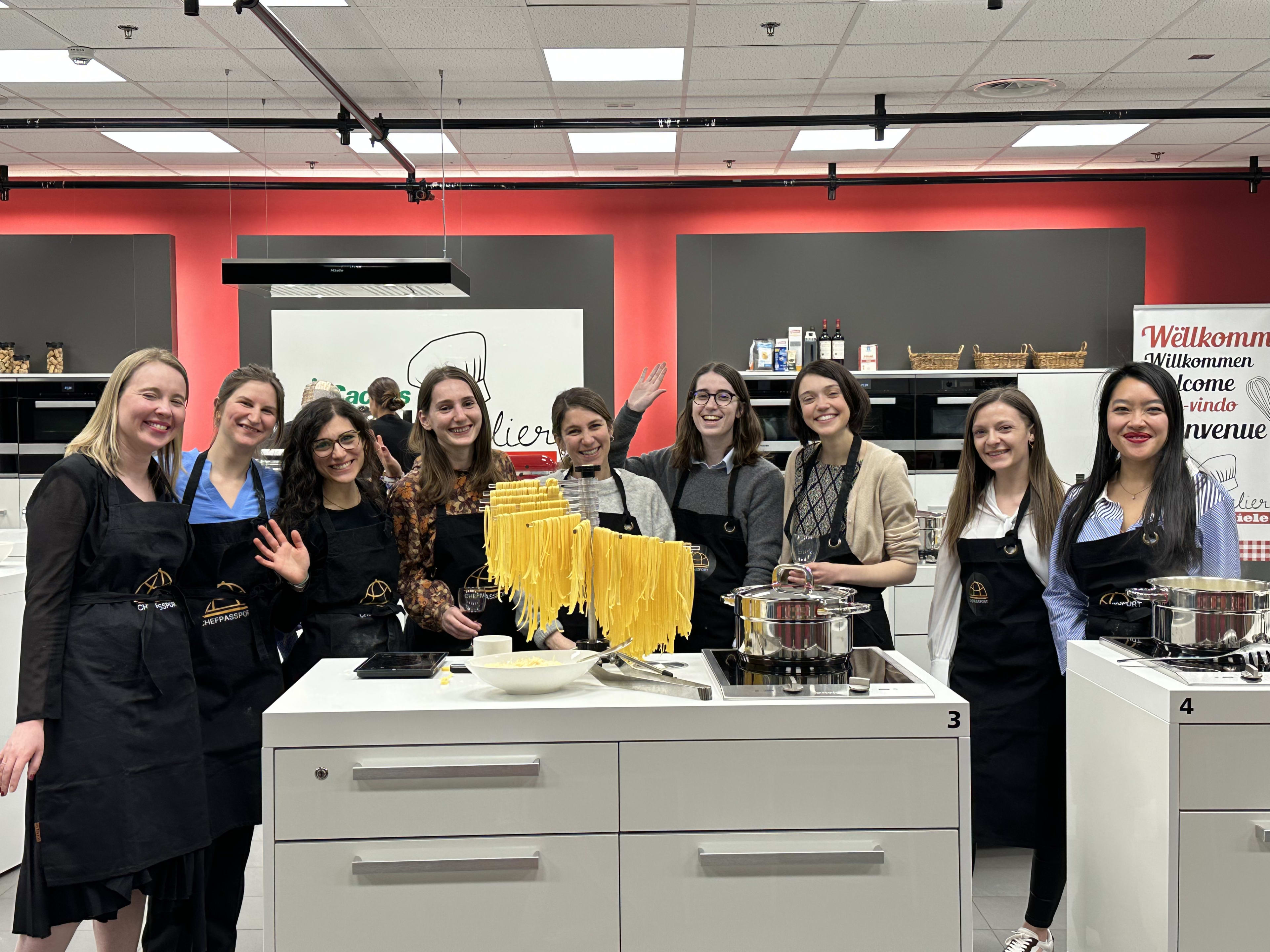
When Dona Eng at Deloitte Luxembourg needed a memorable evening out for her team, she found ChefPassport online and booked a discovery call. Six days later, 10 colleagues gathered at the Kachatelier by Cactus in Windhof for an Italian pasta team building experience, rolling and cutting fresh tagliatelle under Chef Matteo's guidance. By 9pm they were sitting down to eat what they'd made together.

Results at a glance
- 10 Deloitte Luxembourg colleagues took part in a hands-on Italian pasta-making class
- Chef Matteo led the team through Flour Power, making fresh tagliatelle from scratch
- The organiser gave the experience a perfect 10/10 rating, completed the same evening at 9:11 PM
- All four satisfaction categories were marked as highlights: collaborating with colleagues, the atmosphere and setting, the chef's teaching style, and the fun challenges
- When asked if she'd book again, Dona responded: "Yes, I'd love to!"
Yes, I'd love to!
Why Deloitte chose a hands-on cooking experience
Dona had a week to organise something. Not a formal dinner, not another conference room session — something that would bring the team together in a different setting, something tactile and shared. She booked a discovery call through the ChefPassport website on March 24, spoke with Khrystyna and Matteo the next morning, and knew immediately what she wanted: an evening at the Cactus Windhof studio, hands in flour, making pasta together.
The date was fixed — March 31 — and the choice was clear. Flour Power, Chef Matteo's Italian pasta class, offered exactly the right balance: technical enough to be engaging, social enough to feel relaxed, and ending with a meal the team had created themselves.

What happened during the Flour Power class
The team arrived at 7pm on a Monday evening. Chef Matteo walked them through the fundamentals: how to mix the dough, how to roll it thin, how to cut clean tagliatelle ribbons. Red stand mixers hummed, pasta machines clicked, and the studio filled with the particular energy of people learning something new together.
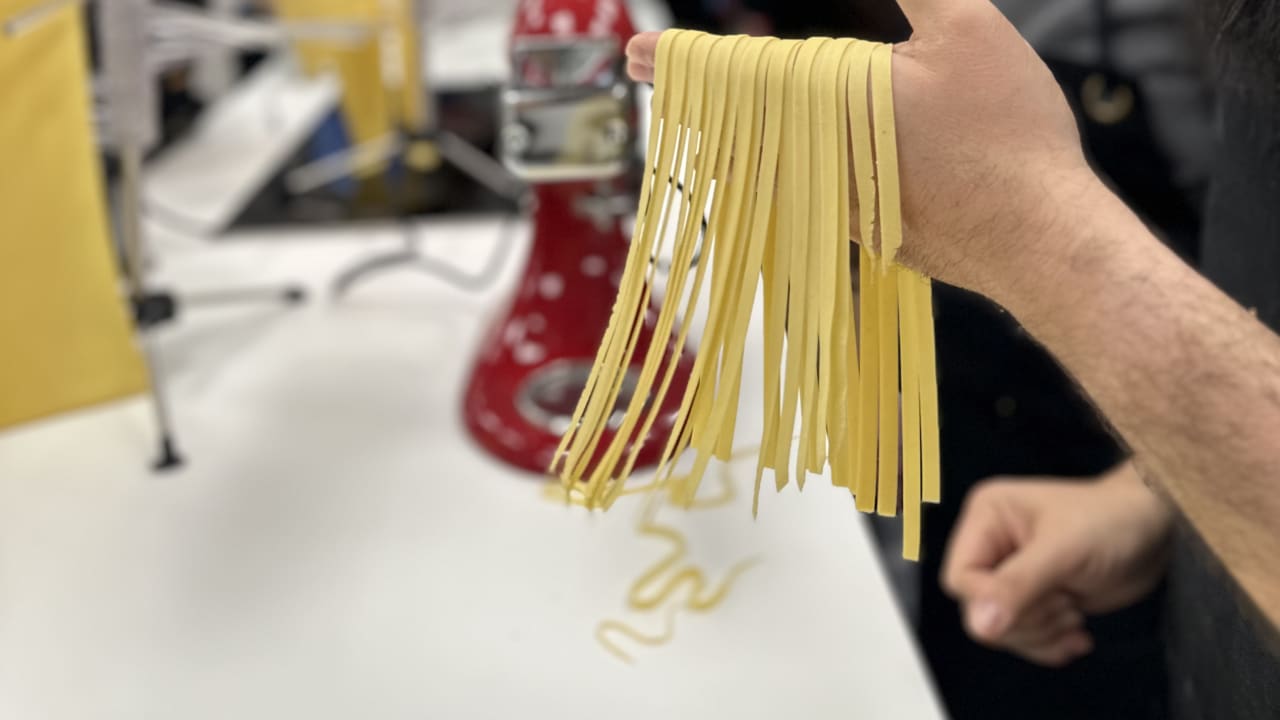
There was laughter. There were questions. Someone held up a tangle of fresh pasta for a photo. By the time the sauce was simmering and the tagliatelle hung drying on wooden racks, the group had settled into a rhythm — working side by side, tasting as they went, talking in a way that doesn't happen during the usual workday.
Two hours later, they sat down to eat. The pasta was theirs, the evening was theirs, and the feedback came fast.
What the organiser valued most
At 9:11 PM — presumably on her way home — Dona opened the post-event survey and gave the class a 10 out of 10. She ticked every box: the collaboration, the atmosphere, the chef's teaching style, the fun challenges. When asked if she'd consider doing it again, she didn't hesitate.
From ChefPassport's side, the process had been straightforward. Khrystyna confirmed chef availability, sent the proposal, and flagged payment timing to secure the booking. Elena Petrova handled the paperwork. No dietary restrictions were flagged, and the event ran exactly as planned. The organiser's job was simple: show up.
Why this works for corporate teams
This wasn't a complicated event. It was 10 people, one evening, one menu. But the structure matters. A hands-on cooking class creates natural collaboration without forcing it. People work in pairs, taste each other's work, troubleshoot together, laugh when something goes wrong. The chef guides the process, the ingredients are prepped, the space is ready. The organiser doesn't need to manage logistics or worry about whether people are engaging — the format does that work.
For teams based in Luxembourg, the Cactus Windhof studio offers a bright, well-equipped setting that feels distinctly different from the office. For remote or distributed teams, ChefPassport runs the same style of interactive experience online, with ingredient boxes delivered in advance and a chef hosting live via video.
If your team needs a shared experience that's memorable, low-pressure, and genuinely engaging — whether it's a quarterly gathering, a project celebration, or simply an evening out — a corporate cooking class in Luxembourg offers a proven format that works.
Frequently asked questions
How many people can join an Italian pasta-making team building class in Luxembourg?
ChefPassport's Italian pasta classes work well for groups of 8 to 30 participants. The Kachatelier by Cactus studio in Windhof provides a spacious, fully equipped kitchen where everyone can work hands-on. Smaller teams like Deloitte's group of 10 benefit from an intimate, collaborative atmosphere, while larger groups can be split into stations with Chef Matteo guiding the entire experience.
Can ChefPassport accommodate dietary restrictions or preferences for corporate cooking events?
Yes. Whether your team includes vegetarians, people with gluten intolerance, or other dietary needs, ChefPassport adapts the menu and ingredients accordingly. Simply flag any requirements when you book, and the chef will adjust the recipes and prepare alternative ingredients so everyone can participate fully.
How much work does the organiser need to do?
Very little. ChefPassport handles chef coordination, ingredient sourcing, venue setup, and event flow. You confirm the date, participant count, and any dietary needs, then show up. The chef leads the class, manages timing, and ensures the experience runs smoothly from start to finish. Dona at Deloitte booked the event with just six days' notice, and everything was handled.
What happens during a Flour Power pasta-making class?
Chef Matteo guides your team through making fresh pasta from scratch — mixing the dough, rolling it thin, cutting ribbons of tagliatelle, and preparing a complementary sauce. Participants work in pairs or small groups, using pasta machines and mixers, with plenty of time for questions, laughter, and hands-on learning. The class ends with everyone sitting down together to enjoy the meal they've created.